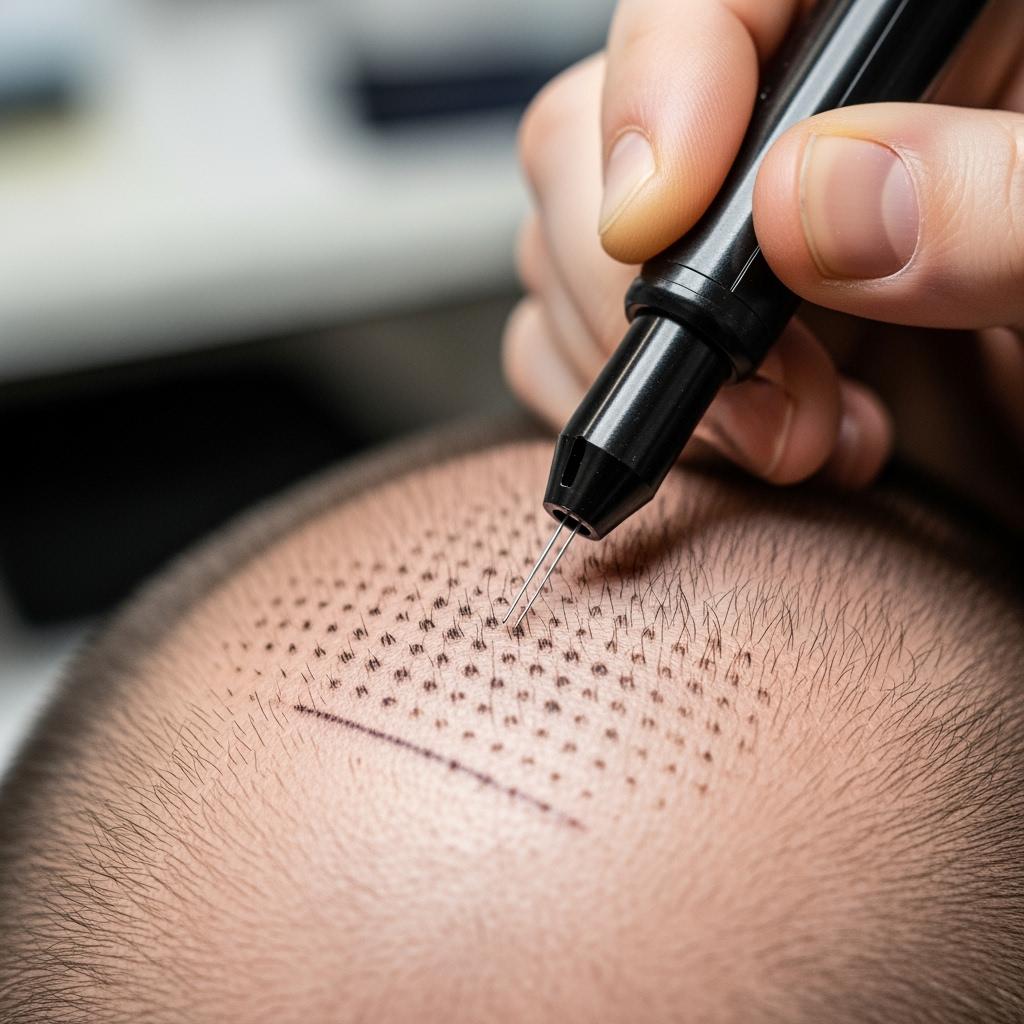
Why scalp micropigmentation turns blue, or looks gray-blue, is usually dots that sit too deep, dots that are too large, or the wrong kind of ink. A fresh session also looks darker than the healed result. That first-day darkness is not the same problem as a scalp that stays cool and blurry after the skin has calmed.
At AzScalpDoctor in Mesa, Francisco Ahumada treats this as a planning issue before pigment goes in, and as a limit if the blue work is already in the skin. More dots on top of a blue field usually make a darker patch. They do not repaint the physics of light in the skin. The studio is at 1061 N Dobson Rd Ste 107, Mesa, AZ 85201. Phone (480) 599-0868. Monday through Saturday, 9am to 5pm.
Why scalp micropigmentation turns blue
Skin scatters light. Short blue wavelengths bounce back more easily when a dark particle sits deeper. Artists call the look a blue or gray cast. The International Society of Hair Restoration Surgery describes the same failure in plain terms: conventional tattoo ink, placed too deep or with a larger needle, can shift toward a color that does not belong on a scalp, including blue (ishrs.org).
Dot size matters. A big dot has more edge for light to catch. Dots packed into a solid sheet look flatter and cooler than separate impressions of hair. A hairline halo that is deep and sharp can read blue in daylight even when the photo looked brown indoors.
Pigment choice matters too. Body-tattoo ink is built for a different job. Mixed colors can separate as they age. SMP pigment is chosen to heal as a hair-like tone. The bottle does not protect you if the depth is wrong. Depth and formula both have to be right.
What is normal in the first weeks
Right after a session the scalp is red and the dots look bold. As the skin settles, the color softens. Some of the darkness you see on day one is surface pigment and irritation, not the final shade. Judging a blue disaster from a same-day photo is a common mistake.
Look again after the scalp has calmed, in daylight, without a ring light. Separate dots that match nearby hair are the goal. A blur that spreads past the dot, or a cool cast that shows at the temples in sun, is the problem this article is about. The side effects guide separates ordinary redness from results that should not be ignored.
Arizona sun speeds fading and makes a cool shift easier to see. A hat after healing is basic care. It will not pull a deep blue dot back up to the surface. Sun protection preserves good work. It does not repair bad depth.
Why another layer often makes it worse
People ask for a darker pass to hide blue. If the blue comes from depth, new pigment at the correct level can only sit over a cool base. The eye still reads the deeper color, and the area gets heavier. A hairline that was slightly blue can become a helmet.
Cover-up is the wrong promise. A removal specialist may lighten carbon pigment with a laser, and only then can an artist rebuild dots. That is a different appointment, with its own healing time. AzScalpDoctor does not describe laser settings and does not guarantee that old work can be erased in one visit. Some blue is lightened enough to rebuild. Some needs more than one lightening visit. Some scars and some very deep ink stay visible.
Read the regrets notes before you pay a second artist to “just go darker.” Rushed density is how a fix becomes a second regret.

How to lower the chance before you start
Ask for healed photos in daylight, including temples and the crown, not only a fresh hairline. Ask what the artist does if a shade heals cooler than planned. A real answer names a wait, a lighter pass, or a stop. A slogan is not an answer.
Ask whether the ink is for scalp work. Ask who holds the machine. The person in the consult should be the person who works on your head. If you already have SMP, say so. Old pigment changes the plan.
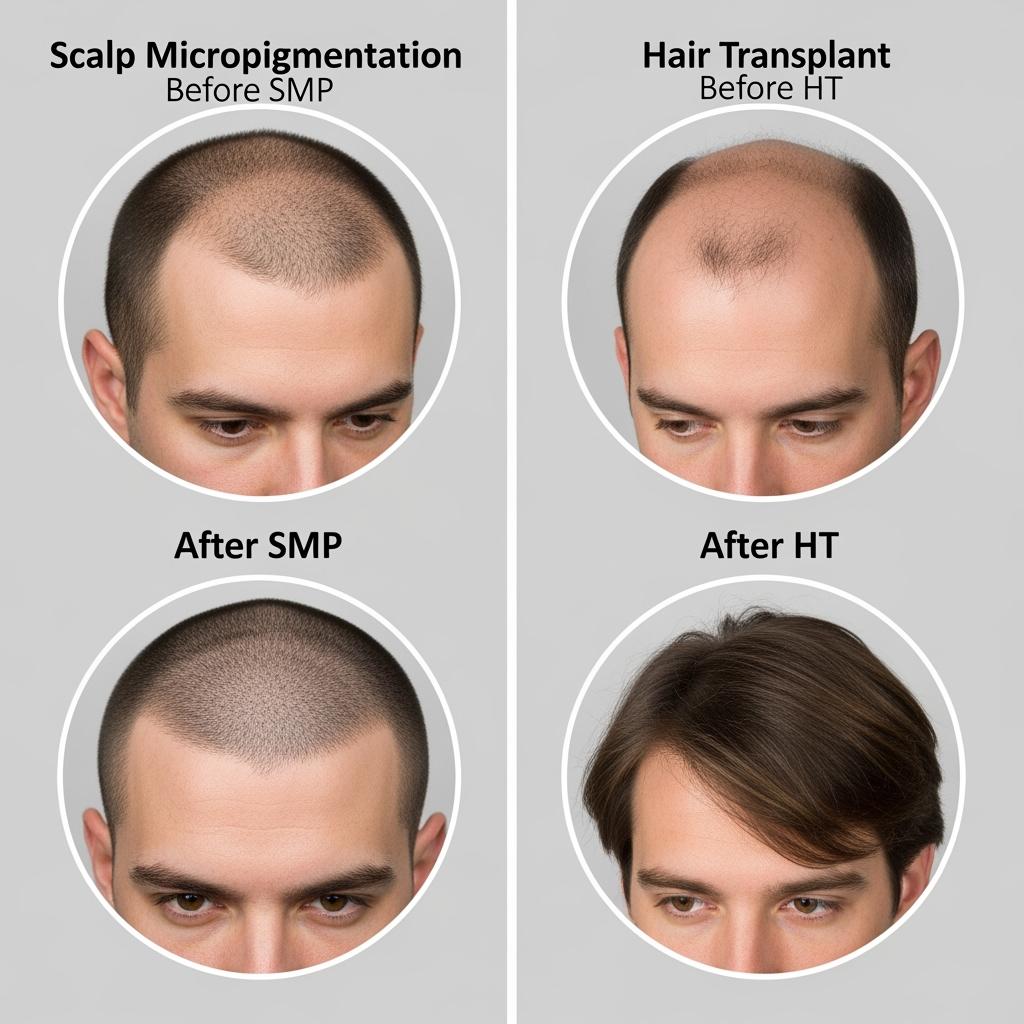
Natural SMP is a pattern of small impressions, not a painted cap. The look-real guide shows what that difference means in photos. Match those photos to your skin tone. A shade that looks right on someone else can look ashy on you.
Sessions are part of color control. Two to four visits let the artist see healed color before adding more. One heavy session is how dots get too dark and too deep. The timeline guide explains fading after a good treatment. Fading lighter is not the same as turning blue. Both can happen. They are not one repair.
Photos lie about blue
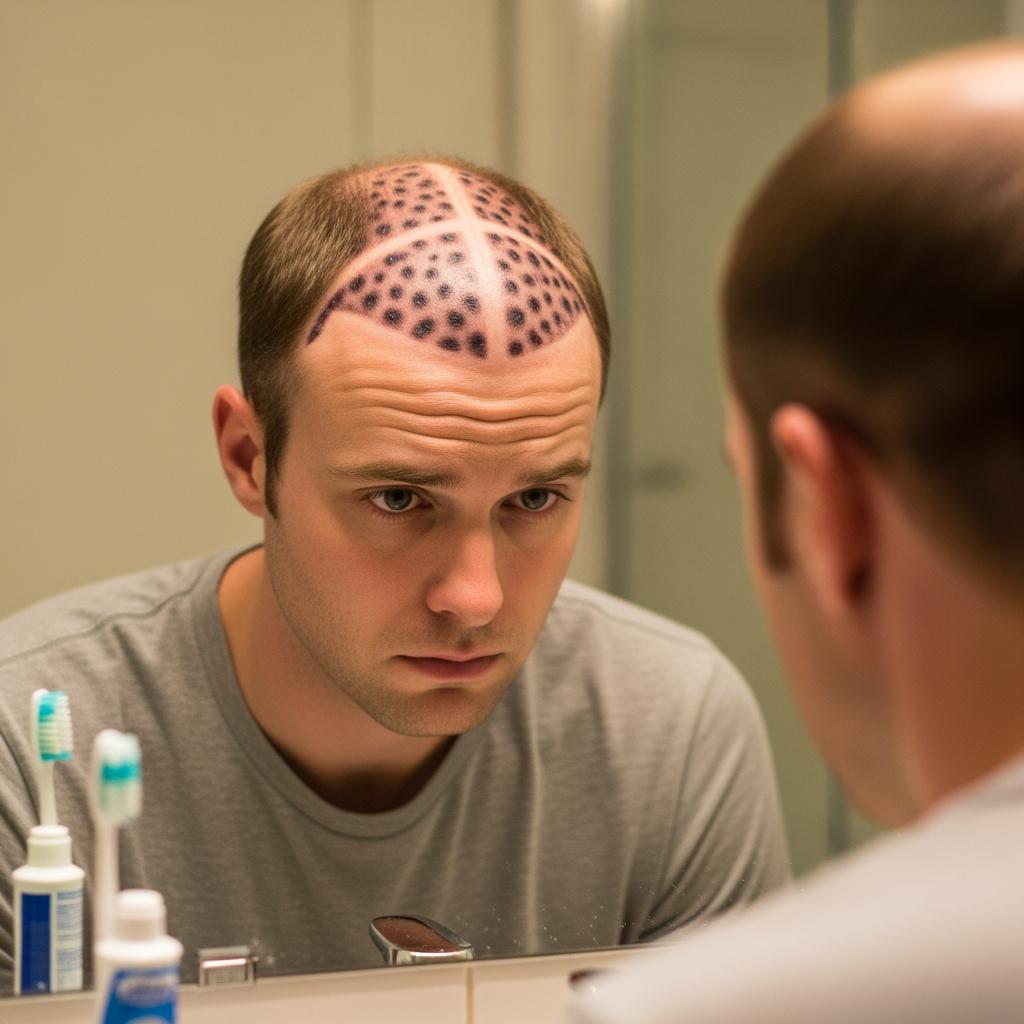
Phone cameras push contrast. Cool bathroom LEDs make a neutral brown look gray. A warm filter does the opposite and hides a cast you will see outdoors. If you are checking old work, step outside at midday and look at the temples, where the skin is thinner and a cool edge shows first.
Send Francisco daylight photos if you cannot come in yet, and still expect an in-person look before anyone talks about adding pigment. A compressed chat photo is enough to decide you need a visit. It is a weak way to decide you need more ink.
Questions people ask
Does all SMP turn blue?
No. Blue is a known failure of depth, dot size, or ink. Plenty of healed work stays a soft hair color. Nobody honest can promise your skin will never soften or shift over years of sun.
Can I tell on day one?
Not reliably. Wait until redness is gone and judge in daylight. Day-one darkness is expected.
Will sunscreen fix a blue scalp?
No. Sunscreen and a hat help slow fade on work that healed well. They do not lift deep pigment.
Where do I ask about my own scalp?
1061 N Dobson Rd Ste 107, Mesa, AZ 85201. Call (480) 599-0868. A consult can tell you whether new work, a wait, or a removal consult comes first. You can leave without booking.
Judge the healed color
Why scalp micropigmentation turns blue is mostly depth, size, and ink, seen through skin and sun. Fresh darkness is a different stage. If your healed scalp already looks cool and blurry, do not buy a darker pass as the first fix. If you are starting new, make Francisco show healed daylight photos and a two-to-four session plan before any pigment is placed.