A fair consultation names scalp micropigmentation side effects before it names a hairline. Most effects are short: redness, tightness, and pigment that looks darker on day one. The problems people regret are different. They come from the wrong ink, rushed density, or a scalp that was not ready.
At AzScalpDoctor in Mesa, Arizona, we separate normal healing from real risk so you can decide with a clear head.

Side Effects That Are Normal
These show up often and usually fade without extra treatment:
- Redness: Common for several hours. Some skin stays pink into the next day.
- Tightness or a mild sunburn feel: The scalp was worked with a fine needle. Tenderness should ease within a day or two.
- Darker dots at first: Fresh pigment plus mild swelling makes impressions look sharper and darker. Healed color is softer.
- Light flaking: Skin can shed fine flakes in the first week. That is not the pigment “falling out” in sheets if you leave it alone.
- Mild itch: Healing skin itches. Scratching can pull impressions out of line.
Cleveland Clinic describes redness lasting several hours and lists few side effects when the technician is qualified. That is the range we prepare clients for. It is not a promise that every scalp looks finished the hour you stand up.
Wash timing, sweat, and sun decide whether those normal effects stay normal. Follow AzScalpDoctor’s aftercare routine instead of improvising with gym sessions and harsh shampoo.
Scalp Micropigmentation Side Effects That Need Attention
Call the studio, and a doctor if the skin is getting worse, when you see:
- Redness that spreads, heat, or pus
- Swelling that increases after the first day
- A rash, hives, or pigment that burns beyond simple tenderness
- Dots that blur into a solid patch while the skin is still wet and inflamed
Infection is uncommon when needles and pigment are handled correctly. It is still possible any time skin is broken. The U.S. Food and Drug Administration lists infection, allergic reaction, and keloids among risks of tattoos and permanent makeup. SMP is finer work, and it is still pigment placed with a needle.
Color Change, Including a Blue or Gray Cast
This is the side effect that shows up in search because it is visible and hard to hide. Proper SMP pigment is chosen to heal as a hair-like brown, black, or soft gray that matches your hair and skin. Standard body-tattoo ink, placed too deep or chosen too cool, can shift blue or green as years pass.
Fading itself is expected. Skin renews and sun lightens contrast. A slow fade is not a failed procedure. A sudden color shift toward blue, or a solid helmet of pigment, is a technique problem. Read scalp micropigmentation regrets before you chase the darkest result in a portfolio.
Healed photos in daylight tell you more than a fresh, wet close-up. Use the checklist in does scalp micropigmentation look real.
Does SMP Damage Existing Hair?
Done at the correct depth, scalp micropigmentation does not “kill” follicles or replace a medical treatment for hair loss. It does not grow hair either. The dots sit as a cosmetic layer so thinning or a shaved scalp reads fuller.
Existing hair can look unsettled for a few days on a density fill. That is irritation, not a new diagnosis. Scratching, tight hats on fresh skin, or treating an active scalp disease add stress the procedure itself does not require.
Women asking about a soft fill can read SMP for women with thinning hair. The side-effect profile is similar. The design is lighter, so over-dark pigment is the mistake to avoid.
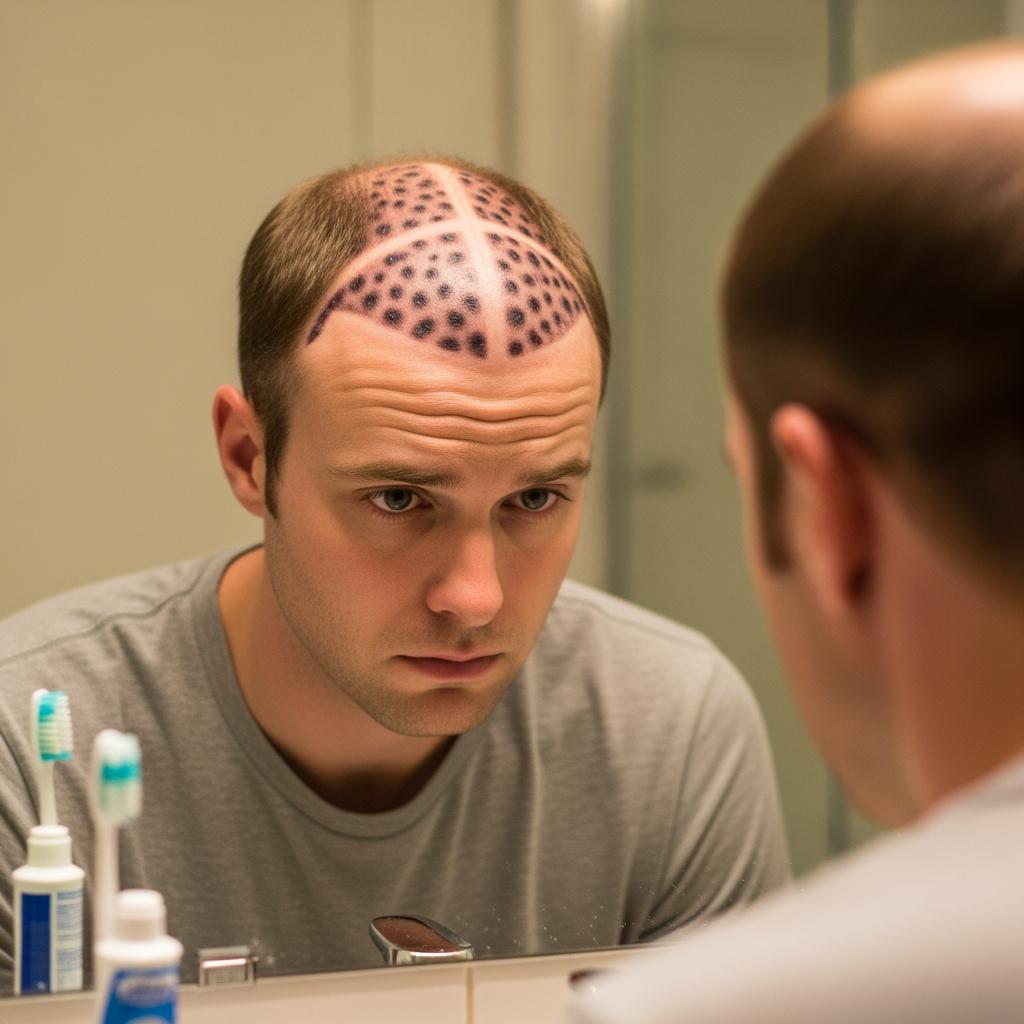
Scars, Keloids, and Active Scalp Conditions
Scar camouflage is a common reason people book SMP, and scar skin does not hold pigment like untouched skin. Pigment can spread, fade faster, or need more sessions. That is a limitation, not a surprise we save for the end. Details are in how SMP blends FUE and FUT scars.
If you form keloids, say so before we book. Raised scar tissue is a poor trade for a cosmetic hairline. The same pause applies to active scarring alopecia, a psoriasis flare, infection, or a sunburn. Stable skin first. Pigment second.
Alopecia patterns can still be good candidates once a clinician says the condition is quiet. See SMP for alopecia for how patch edges should be planned.
Less Common Reactions People Worry About
- Allergy: Rare, and more likely if you already react to pigments or metals. Tell us about past tattoo reactions.
- MRI sensation: Uncommon with tattoos and permanent makeup. Tell radiology you have SMP if a scan is planned.
- Uneven fade: More sun on the crown than the sides can make one zone lighter. Hats and sunscreen after healing keep the fade even.
- Too-dark healed result: Usually from packing too much pigment in session one. Layering across visits is how we avoid it.
A dark first session is harder to soften later. A lighter first pass is the safer start.
How to Lower the Chance of a Bad Outcome
- Choose a studio that shows healed results, not only fresh photos.
- Confirm SMP pigment, not body-tattoo ink.
- Accept two to four sessions instead of one packed appointment.
- Delay treatment if the scalp is inflamed, sunburned, or freshly operated on.
- Follow aftercare on washing, sweat, and sun.
- Plan a future touch-up instead of asking for maximum darkness now.
Price pressure causes some of the worst side effects. A cheap session that needs repair costs more than a careful plan. The ranges are explained in hair tattoo cost.
FAQ
How long do scalp micropigmentation side effects last?
Redness and tightness usually calm within one to two days. Flaking and darker color can last through the first week or two. The settled color is what you judge, not the mirror on the drive home.
Can SMP cause hair loss?
The procedure is not designed to extract or destroy follicles. A medical hair-loss condition you already have can continue. SMP hides the look. It does not stop the biology.
Is fading a side effect?
Fading is expected over years. Uneven color, blue shift, or blurry dots are the effects worth questioning. Sun care and the right pigment keep fading slow and even.
What if I dislike the result?
Small adjustments happen at the next session. A result that is far too dark or the wrong shape needs an experienced correction plan, sometimes including laser. This is why the first session stays lighter.
What to Remember
Scalp micropigmentation side effects, for a careful studio, are mostly a short heal: red, tight, darker, then softer. Infection, allergy, keloid scarring, and bad color are the risks that depend on your skin history and the artist’s pigment and depth. You should hear both lists before you pay a deposit.
If you want that conversation in person, contact AzScalpDoctor in Mesa. We will look at your scalp, name what is normal for your case, and decline the session if the skin is not ready.
Tinggalkan Balasan