Female pattern hair loss is a gradual thinning that often shows as a widening center part and lower density on the crown. It is common, hereditary, and different from a sudden shed after illness. AzScalpDoctor in Mesa, Arizona explains how it looks, how it differs from other loss, and what honest next steps look like. Studio: 1061 N Dobson Rd Ste 107. Monday–Saturday 9am–5pm. Call (480) 599-0868. Education—not a prescription.
Related maps: thinning hair women, male pattern baldness, and dht and hair loss.
What female pattern hair loss looks like
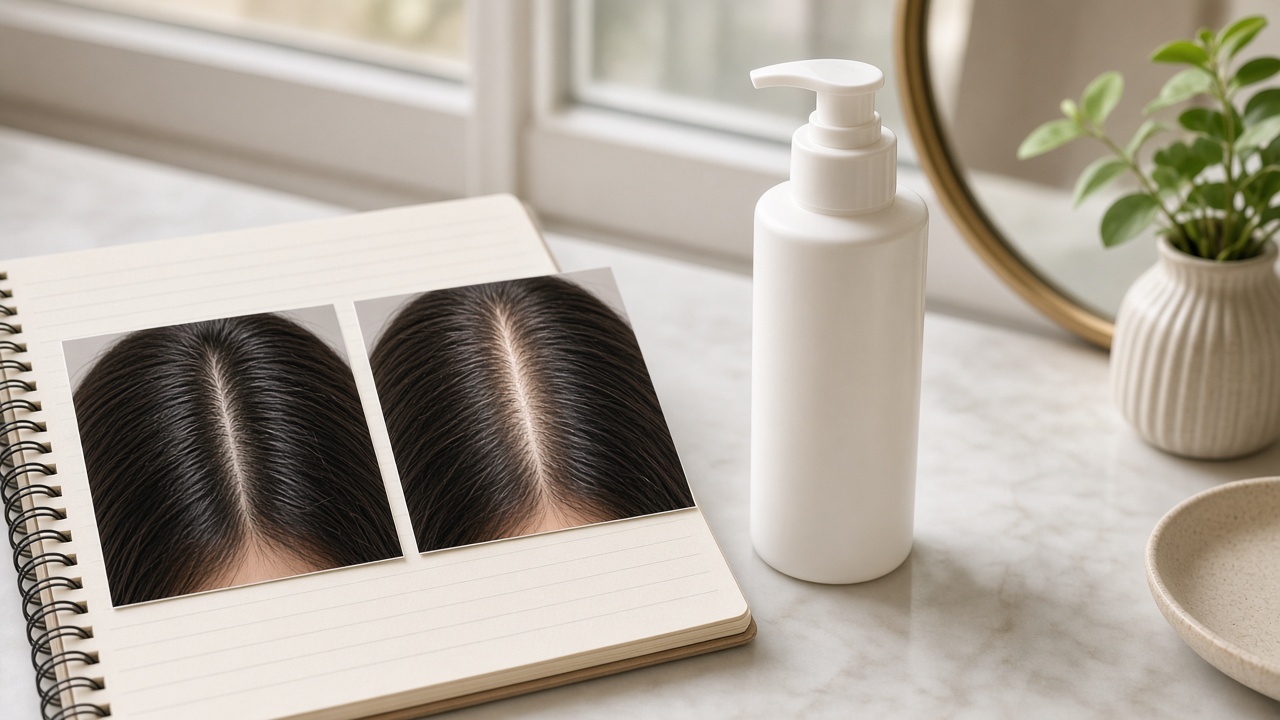
Many women notice a wider part first. Ponytails feel smaller. The front hairline often stays, while the top looks thinner under overhead lights. Miniaturization shrinks follicles over years—hairs become finer and shorter each cycle.
It can run in families on either side. Hormonal shifts around menopause may make it more noticeable. Some people with PCOS or androgen excess see earlier changes. A clinician should sort the full picture.
Sudden dumps of bulbs after fever or crash dieting are usually telogen pathways: hair shedding vs hair loss, rambut rontok setelah sakit, and stress hair loss.

How it differs from breakage and telogen shed
Breakage leaves short pieces without bulbs. Pattern loss leaves a progressive density map. Telogen shed is diffuse and timed to a trigger weeks earlier. Photos in the same light help you and a clinician sort faster.
Heat and bleach can fake “thinning” in selfies: how to stop hair breakage and cara merawat rambut rusak. Protect shafts while you evaluate the follicle story.
Length retention still matters for cosmetic fullness: how to grow hair faster and how to thicken hair.
What evidence-based care usually means
Dermatologists often discuss topical minoxidil for appropriate patients, sometimes other prescription options, and lifestyle basics. Results take months of consistent use. Stopping usually loses gains. Pregnancy and breastfeeding change what is safe—ask a clinician; this article does not dose.
Oils and biotin gummies do not reverse genetic miniaturization as primary therapy: biotin for hair, minyak almond untuk rambut, minyak jojoba untuk rambut.
Scalp inflammation still deserves its own plan: itchy scalp, seborrheic dermatitis, and dry scalp.
Cosmetic habits that help appearance
Volumizing wash routines, root lift, and less heavy cream at the scalp can improve day-to-day photos. Clarify buildup that flattens fine hair: product buildup hair and clarifying shampoo.
Choose shampoo for your scalp type: cara memilih sampo. Leave-in on ends only: leave-in conditioner. After-wash care: cara merawat rambut setelah keramas.
Arizona sun highlights scalp show. Hats help UV comfort. Sweat under helmets needs cleansing so itch does not distract from the real plan: how often should I wash my hair.
Myths that waste months
Hats do not cause female pattern loss. Washing “too often” is not the genetic driver. Detox teas do not rewrite follicle sensitivity. Aggressive scalp tools can break hair without reversing miniaturization: scalp massage hair growth.
Protein treatments help damaged shafts temporarily: protein treatment hair. Rice-water rinses are cosmetic slip, not a follicle rewrite: air beras untuk rambut.
Postpartum or diet sheds can coexist with early pattern loss. Sorting both prevents wrong expectations: postpartum hair loss and rambut rontok setelah diet.
A six-month tracking plan
Month 1: daylight photos of part and crown; family history; meds list. Months 2–3: gentler styling, less max heat, clinician visit if thinning is clear. Months 4–6: follow medical advice long enough to judge—many therapies need consistent months, not weekend trials.
Hard water and frizz can confuse photos: hard water hair and frizzy hair. Split ends still need trims: split ends.
Heat habits matter for retention: cara merawat rambut setelah catok.
FAQ — female pattern hair loss
Is it the same as male pattern baldness?
Related androgen genetics, different maps. Women more often keep the frontal line and thin centrally. Men more often recess at temples and crown.
Will oils reverse it?
Oils may soften shafts. They do not reliably reverse miniaturization. Medical options need a clinician.
How long before I judge treatment?
Often six to twelve months of consistent use. Matched photos beat daily mirror checks.
Where does SMP fit?
Scalp micropigmentation adds the look of density with pigment. It does not grow hair. Typical plans are 2–4 sessions after the scalp is calm. Francisco Ahumada in Mesa discusses timing honestly.
When to see a doctor
Seek care for progressive thinning, sudden patches, pain, pus, or unclear diagnosis. Bring a timeline and product list. Labs may matter when other causes are suspected. AzScalpDoctor educates; clinicians diagnose and prescribe.
Studio Ste 107 · Monday–Saturday 9am–5pm · (480) 599-0868.
Styling and camouflage without false promises
Layered cuts, soft color, and root-lifting products can camouflage while medical care runs. Avoid bleaching for “thickness.” Dry shampoo can lift roots between washes: cara pakai dry shampoo.
Argan or almond on ends is fine; keep roots light: minyak argan untuk rambut. Castor at the crown often collapses volume: castor oil for hair.
Rosemary oil trends have limited evidence and still need dilution: rosemary oil hair growth.
Judging progress without obsession
Track part width, ponytail circumference, and how much scalp shows under the same overhead light. Monthly photos beat daily mirror checks. A jar for short broken pieces versus long bulbs helps separate breakage from true shed.
If density keeps dropping after three months of gentle care alone, escalate to a clinician rather than stacking more kitchen rinses. Cosmetic camouflage—including SMP over a typical 2–4 sessions when appropriate—is a separate conversation once the scalp is calm.
Porosity and product weight still matter for fine hair that collapses by noon: hair porosity. Oily roots with dry ends are common in desert climates—cleanse the scalp, moisturize lengths: oily scalp.
Consistency beats novelty. One stable plan for six months is more informative than ten weekend experiments. Keep expectations honest: slowing progression and improving appearance are realistic goals; overnight follicle rebirth is not.
Bottom line
Female pattern hair loss is gradual, genetic, and manageable earlier rather than later. Sort it from shed and breakage, protect length, use medical care when appropriate, and treat pigment camouflage as a separate visual tool—usually 2–4 sessions when the scalp is calm. Mesa Ste 107 · Monday–Saturday 9am–5pm · (480) 599-0868.