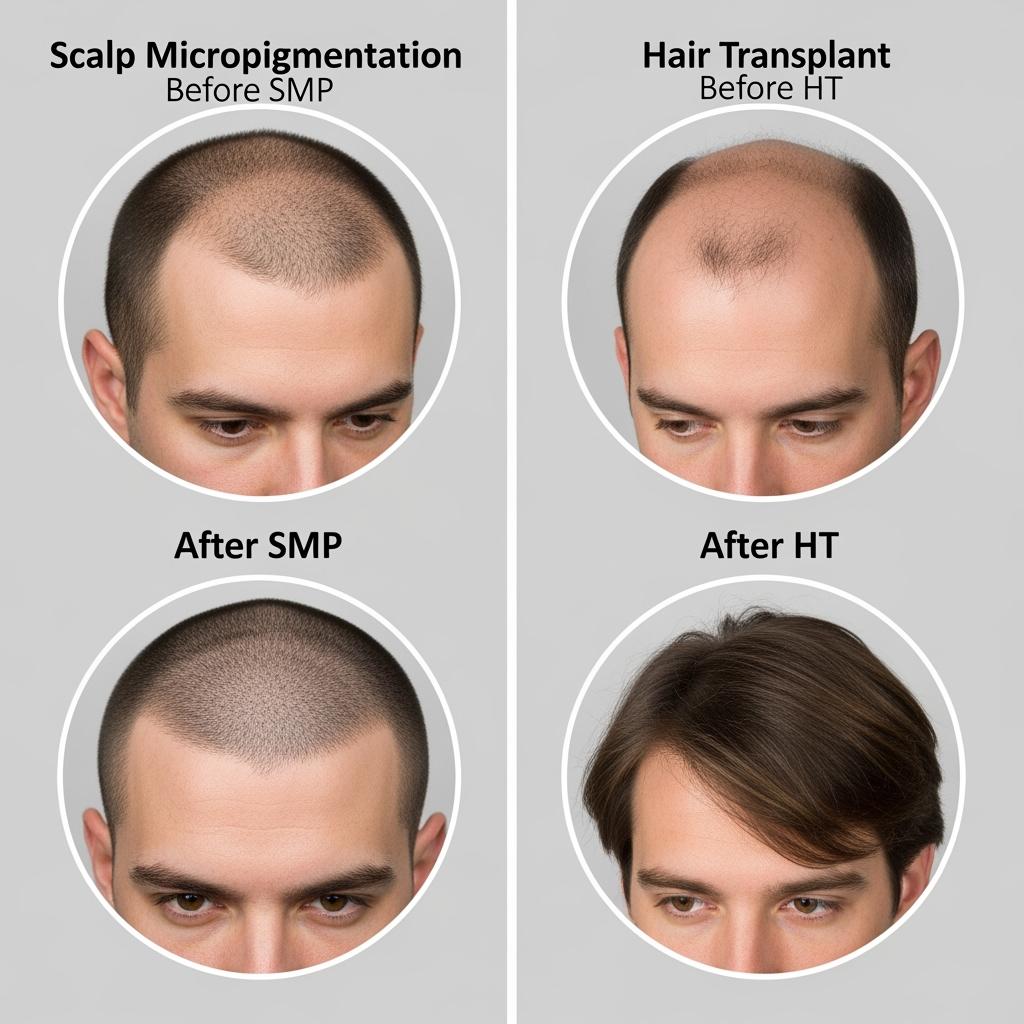
Scalp micropigmentation density is pigment placed between hairs you still have, so the scalp shows less. It is not a buzz cut, and it is not a solid cap under long hair. If you shave after a heavy density pass, the dots can look too dark. If you keep length over a shaved-head pattern, the edge of that pattern shows.
Francisco Ahumada plans that difference at AzScalpDoctor, 1061 N Dobson Rd Ste 107, Mesa, AZ 85201. Phone (480) 599-0868. Monday through Saturday, 9am to 5pm. Say the haircut you will still wear in six months. The dots follow that, not a photo of someone fully shaved.
What scalp micropigmentation density is for
The job is contrast. Skin between shafts looks bright under office lights, a part line, or a photo from above. Small impressions darken that skin so the hair you have reads fuller. They do not add strands you can pull into a ponytail. They do not stop further loss.
A part that is widening, a crown that glows, and thin temples can all be density work. They are not one density. Temples meet the hairline and need a softer edge. The crown is hit by overhead light and is easy to overfill. Read the crown article if the whorl is the main complaint, and the hairline article if the front is the issue. Do not let one quote silently include a new low hairline.
Women keeping length use the same idea with a lighter hand. The women’s density guide is that softer fill. This page is the choice itself: keep hair, or commit to short.
Why the buzz-cut plan is the other door
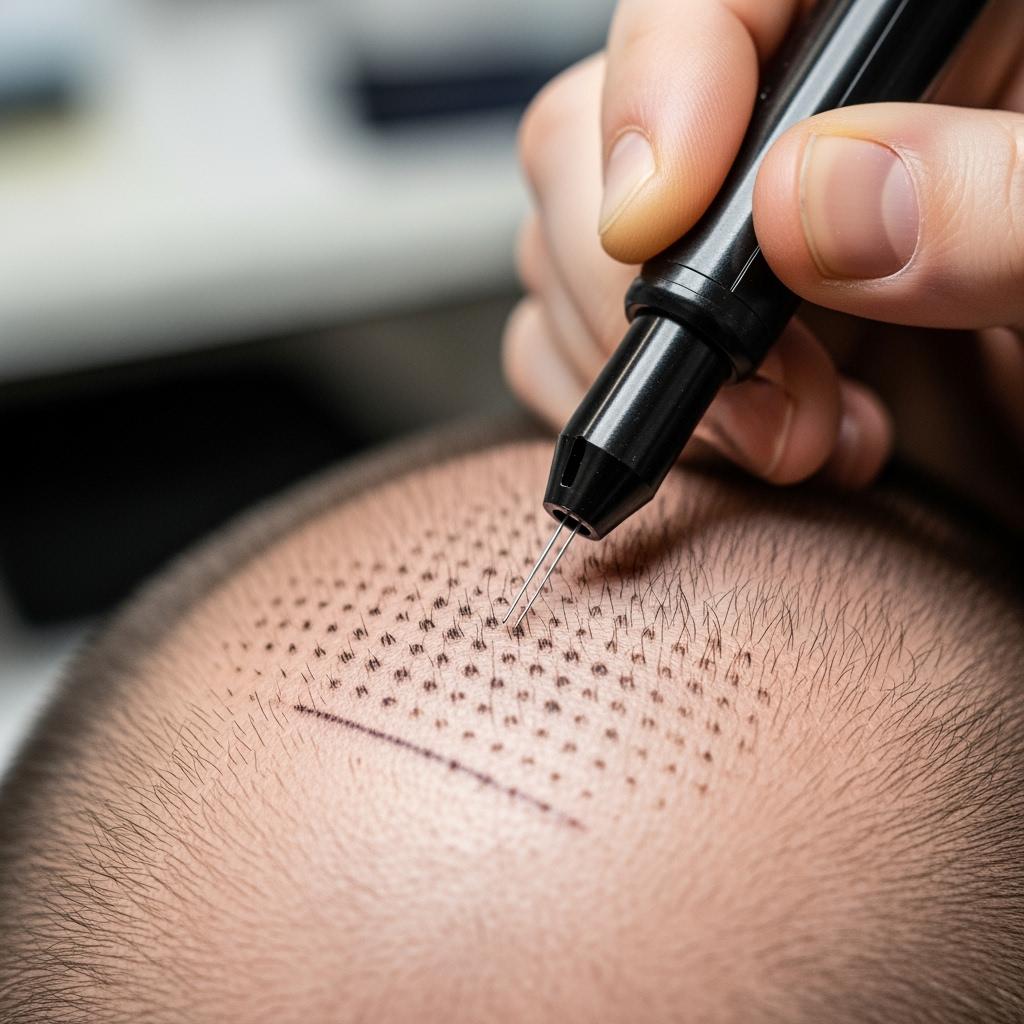
A buzz cut fills bare skin so a close crop looks even, then you keep cutting everything short. Density leaves the length and uses fewer, smaller dots. Mixing them in one heavy session is how a head looks painted when you grow it or when you shave it.
If you might shave later, say so now. A light density can sometimes be built toward a shorter look in later sessions. A packed first pass cannot be unshaved. The buzz-cut guide is the short commitment. Pick it on purpose.
Ask for healed photos of people who kept hair like yours, in daylight, from above. Fresh work is darker. The look-real guide shows separate impressions versus a field of ink. Density fails when the impressions join into a shadow.
Sessions and what you should not do first
The plan at this studio is two to four sessions. The first pass stays light. Later passes add only where healed skin still shows. One dark visit skips the only checkpoint that keeps density from becoming a stain.
Do not shave the area the morning of a consult if that is not your haircut. Come with product washed out. Point to gray hairs if you have them. A black dot next to white hair looks like two cuts. Mention old SMP. Covering it darker is a common regret.
The consultation does not place a full treatment. You can leave without booking. If the shed is sudden or still fast, see a doctor before pigment. Density on hair that is about to fall out becomes too heavy when the shafts are gone.
Limits that should be said out loud
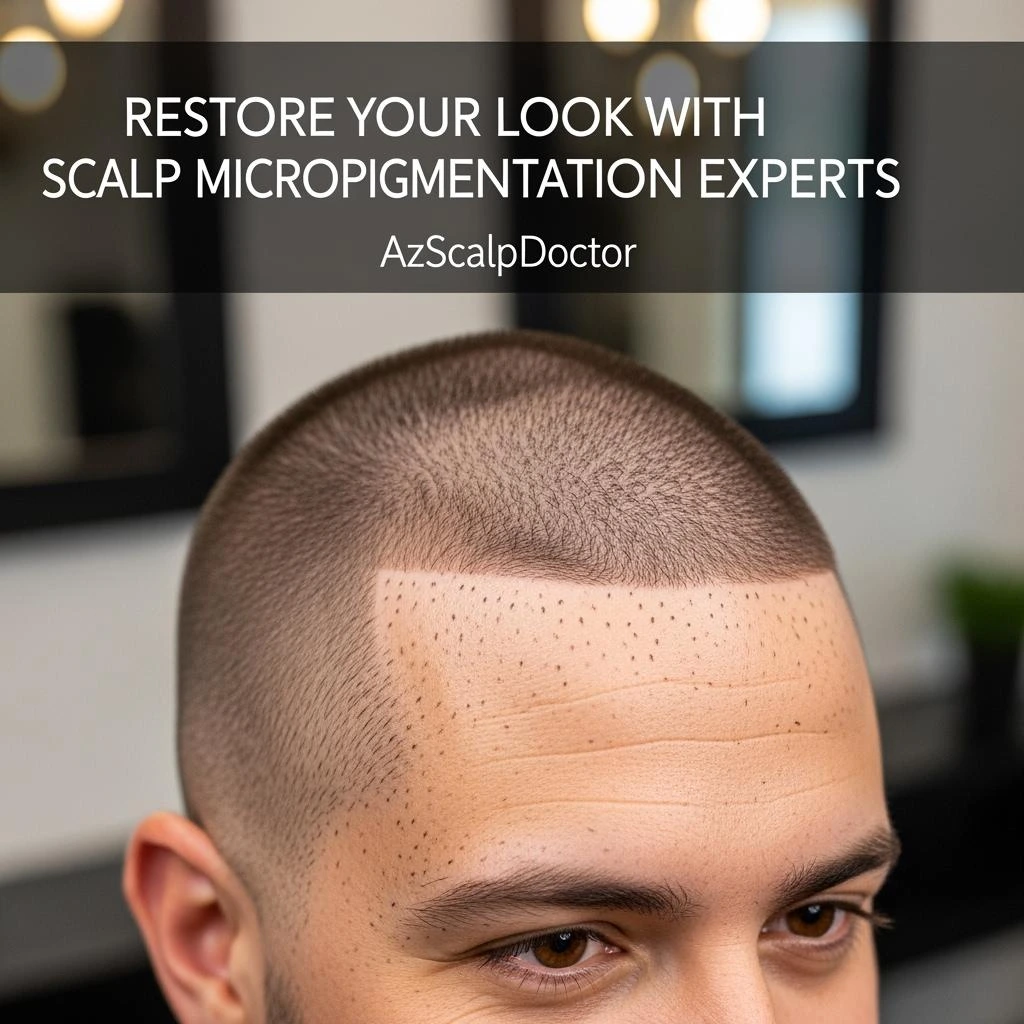
From straight above, a crown with little real hair can still look softer than the sides. Chasing a perfect overhead photo is how density gets too dark. Stop when the skin is less bright.
SMP does not grow hair and does not thicken the fiber of the hair you have. Dye, fibers, and pigment are three different materials. Fibers wash out. Pigment stays and can still fade in Arizona sun. A hat after healing slows that. It does not fix dots that were too large.
If you later want the pigment reduced, that is a removal conversation with another provider, not a shampoo. Better to keep the first passes light than to plan on erasing them.
Fibers, dye, and a part you still use
Hair fibers and colored powders wash out. They are a fair trial of “do I like less scalp show,” and a bad predictor of a permanent dot. If you use them, wash them out before the consult so the artist sees the real contrast. Leaving them on hides the job and dirties the skin.
Dye on the hair is not dye in the pigment. Tell Francisco if you color your hair and which shade you actually keep. A match to freshly dyed hair looks wrong when the roots grow. A match to the roots looks wrong the day after the salon. Pick the version you live with most days.
A deep side part will expose a strip of dots. If that strip is too dark, you will see a line every morning. Ask to see the part in the mirror before more pigment is added on a later session. Density is allowed to look like scalp with a little more shade. It is not required to look like a painted stripe.
Sun along a part line fades faster than hair-covered skin. A hat after healing is ordinary care in Mesa. It will not rescue an overfilled part. Better to add less on session one.
Questions about density
Do I have to shave?
No, not for density between existing hairs. Shaving is for a buzz-cut plan. Come in the length you intend to keep.
Will people see dots if I part my hair?
They can, if the dots are too big or too dark. The aim is a softer scalp, not invisible ink under a microscope.
Is it one session?
No. Two to four sessions let the healed color be judged before more is added.
Where is the studio?
1061 N Dobson Rd Ste 107, Mesa, AZ 85201. Call (480) 599-0868.
Choose the haircut before the dots
Scalp micropigmentation density works when you keep the hair and the impressions stay small. Francisco Ahumada can look at your part and crown in Mesa and refuse a shaved pattern you did not ask for. If you are not sure you will keep the length, decide that before the first pass. The other plan is a buzz cut, not a darker guess.
Tinggalkan Balasan