A successful hair transplant can restore growth, but many clients are left with a pale line or dotted donor marks that still draw attention. Hair transplant scar camouflage with scalp micropigmentation is one of the most practical ways to soften those marks without another surgery. This guide explains how SMP blends FUE and FUT scars, who is a good candidate, and what realistic results look like.
At AzScalpDoctor in Mesa, Arizona, scar work is planned differently from a full buzz-cut restoration. Scar tissue holds pigment differently, so depth, density, and session spacing all change.
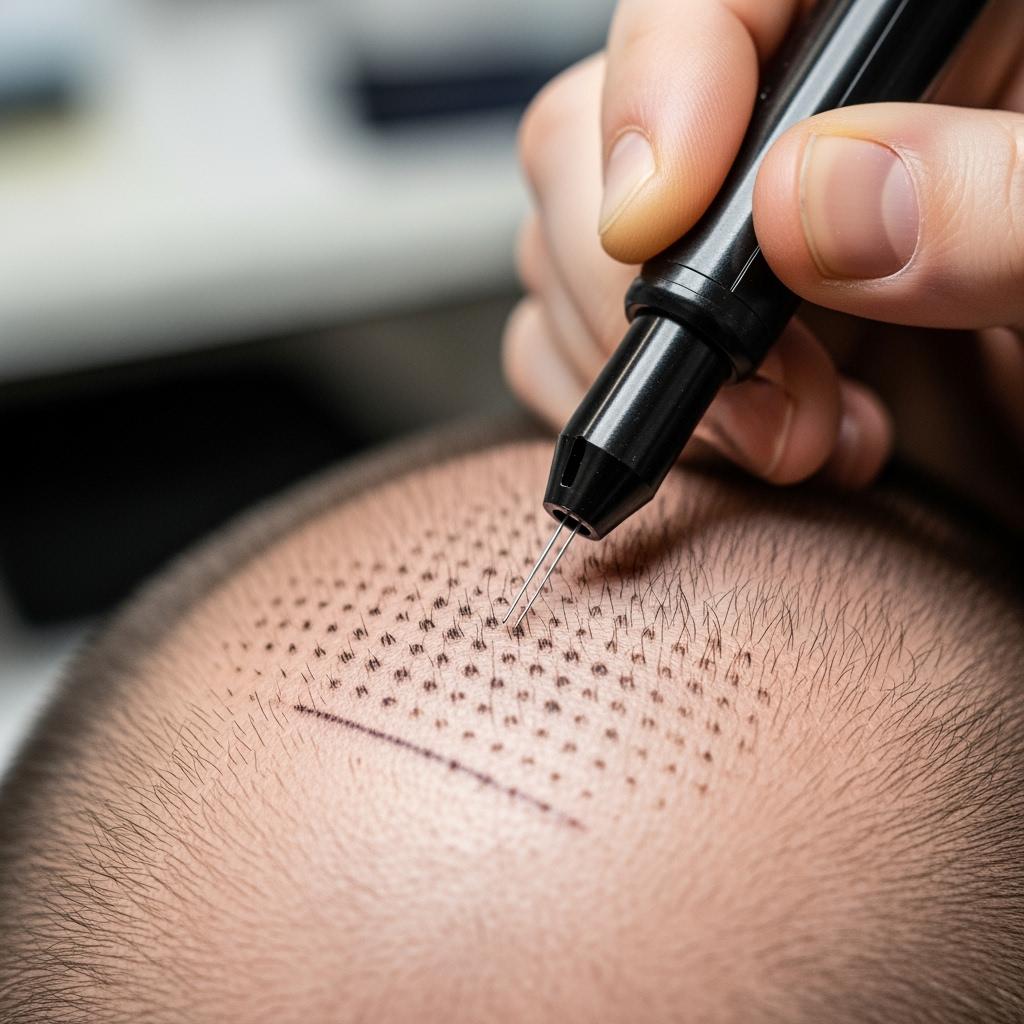
Why Transplant Scars Stay Visible
FUT strip surgery often leaves a linear scar across the donor area. FUE leaves many small circular extraction marks. When hair is worn short, both patterns can flash white or pink against darker scalp. Some clients also see uneven density around the scar, which makes the contrast worse in daylight and photos.
If you are still deciding between surgery and SMP, read our comparison: scalp micropigmentation vs hair transplant. Many people use both: transplant for growth, then SMP for scar blending.
How Hair Transplant Scar Camouflage Works
Scalp micropigmentation places tiny pigment impressions into the upper dermis so they resemble hair follicles or soft shadow. On a scar, the artist matches nearby density, breaks up the bright line or dots, and rebuilds visual texture. The goal is not to erase the scar medically. The goal is to make it far less noticeable at conversational distance.
New to the method? Start with What Is Scalp Micropigmentation?
FUT Linear Scars
A strip scar is usually treated by placing pigment inside and along the line so the pale band no longer reads as a single stripe. Irregular spacing matters. A perfectly even row can look drawn. Soft, follicle-sized dots that follow hair direction look more natural when the hair is faded short.
FUE Dot Scars
FUE marks are smaller but numerous. Camouflage focuses on reducing the white-dot pattern by adding pigment into and between extraction points. Overfilling can create a dark patch, so artists build density in layers.
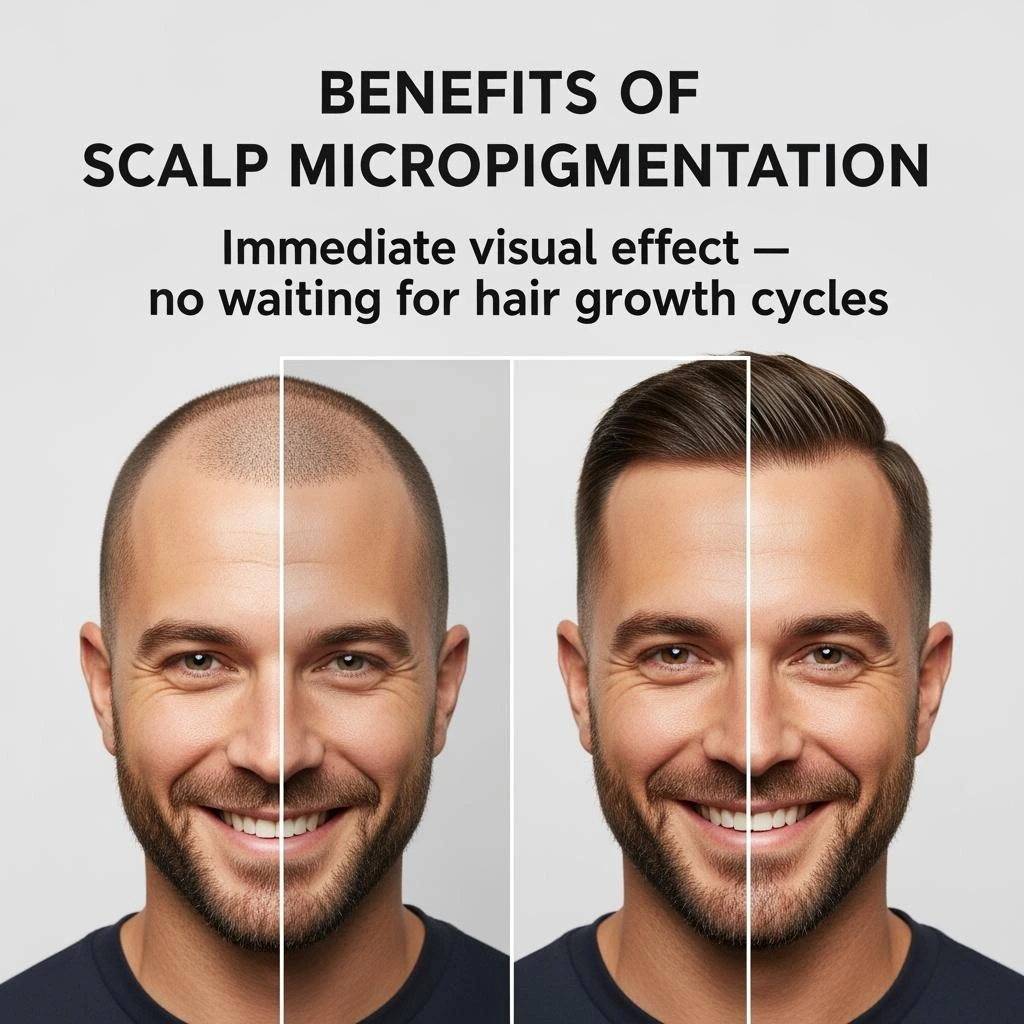
Who Is a Good Candidate?
- Clients with healed FUT or FUE donor scars
- People who wear short hair or a fade and see the scar clearly
- Those who do not want revision surgery
- Clients with stable scars, not fresh post-op wounds
- People who accept pigment camouflage rather than scar removal
Fresh surgical scars should heal fully before pigment work. Raised, red, or unstable scars may need a medical review first. A consultation is the right time to decide whether SMP, time, or another option fits.
What Results Can You Expect?
Well-planned hair transplant scar camouflage usually makes the scar blend into a short haircut or thinning donor zone. In bright sun you may still see texture differences, because scar skin is not identical to normal scalp. Most clients judge success by whether the eye stops locking onto the line or the white dots.
For a broader realism check, see does scalp micropigmentation look real.
Sessions, Healing, and Longevity
Scar cases often need two to four sessions. Scar tissue can reject some pigment on the first pass, so a second visit is normal, not a failure. Aftercare during healing protects retention. Follow the routine in our SMP aftercare guide.
Pigment is long-lasting but not frozen forever. Sun, skin renewal, and scar texture affect fade. Timelines are explained in how long does scalp micropigmentation last.
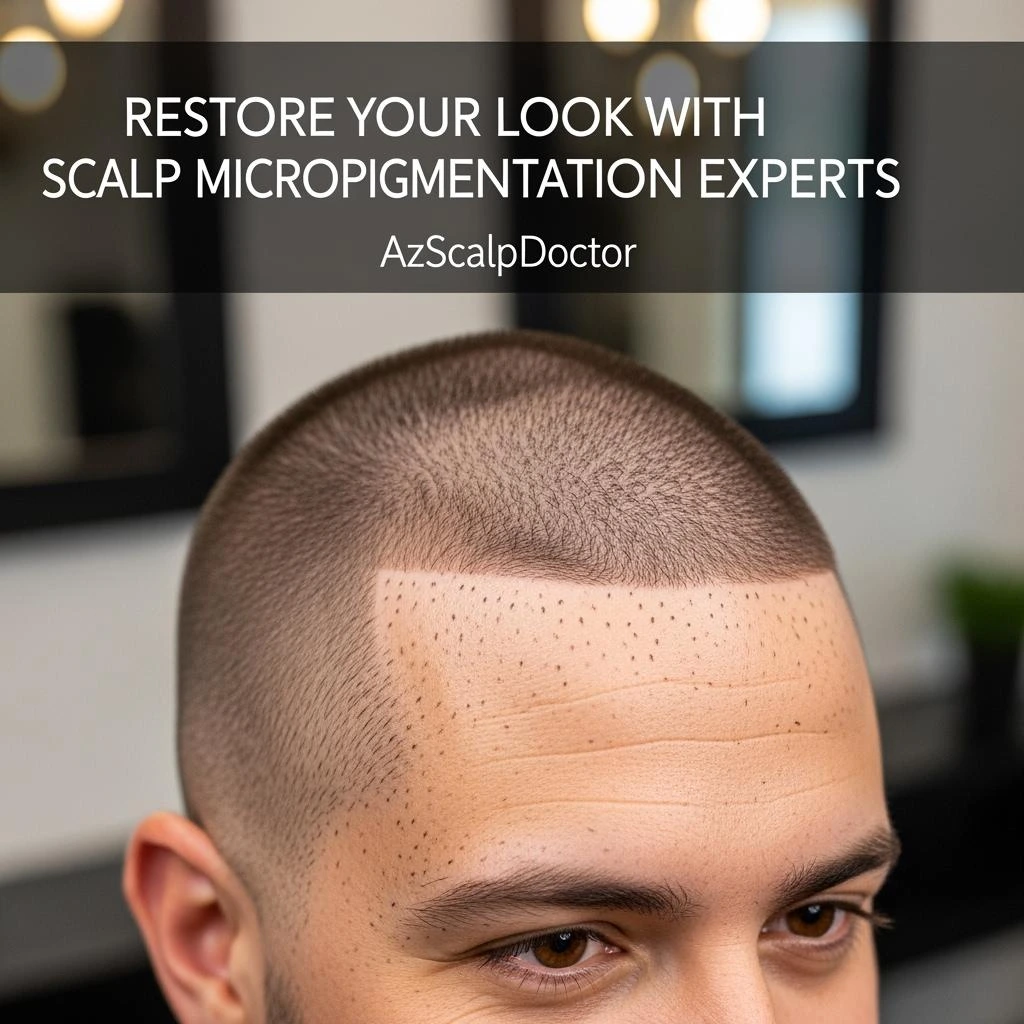
Cost Factors for Scar Camouflage
Price depends on scar length or FUE field size, skin complexity, and whether you also want density around the donor zone. Small linear touch-ups cost less than a wide FUE field plus surrounding blend. Ask what is included: sessions, pigment type, and any touch-up window.
See pricing context in our hair tattoo cost guide and the Indonesian overview biaya scalp micropigmentation.
Mistakes That Make Scars Look Worse
- Using standard tattoo ink instead of SMP pigment
- Going too dark in one session
- Ignoring hair growth direction
- Treating a scar that is not fully healed
- Skipping aftercare and losing pigment unevenly
These issues show up often in scalp micropigmentation regrets. Choose healed photos of scar cases, not only fresh buzz-cut galleries.
Hair Transplant Scar Camouflage in Mesa
East Valley clients often want a local studio for multiple visits. AzScalpDoctor, at 1061 N Dobson Rd in Mesa, plans scar camouflage alongside hairline and density work when needed. Local process details are in our Mesa SMP guide and the clinic overview AzScalpDoctor Arizona.
How to Prepare for Your Appointment
- Bring clear photos of the scar with hair short and slightly longer.
- Share your surgery date and technique, FUE or FUT.
- List medications and any keloid history.
- Decide how short you usually wear the donor area.
- Ask how many sessions your scar type typically needs.
FAQ
Can SMP remove a transplant scar?
No. It camouflages color and visual texture. The scar tissue remains, but it draws less attention.
Does it hurt more on scar tissue?
Sensation varies. Some scars are less sensitive; others feel tighter. Your artist can adjust pace.
Can women use scar camouflage too?
Yes, when a surgical or trauma scar shows through longer hair. Density strategy differs from a male fade. Related reading: SMP for women thinning hair.
Combining Scar Camouflage with Density
Some donor zones are both scarred and thin. In those cases, hair transplant scar camouflage is paired with light density so the whole area reads as hair, not as a repaired stripe sitting in a bald patch. The artist feathers pigment outward so there is no hard border between the scar and normal scalp. That blend is what makes short hairstyles wearable again.
Ask to see a plan that shows the scar zone and the blend zone separately. A clear map prevents over-darkening the healthiest skin while under-treating the pale scar. Clients who also want crown density can schedule that as part of the same treatment plan.
Final Takeaway
Hair transplant scar camouflage is a focused SMP service for people who already invested in surgery and still see the donor area. With healed timing, SMP pigment, and layered sessions, FUT lines and FUE dots can blend into a short, natural look.
If you want a scar assessment in Mesa, contact AzScalpDoctor. We will review your scar, hair direction, and a session plan before any pigment is placed.