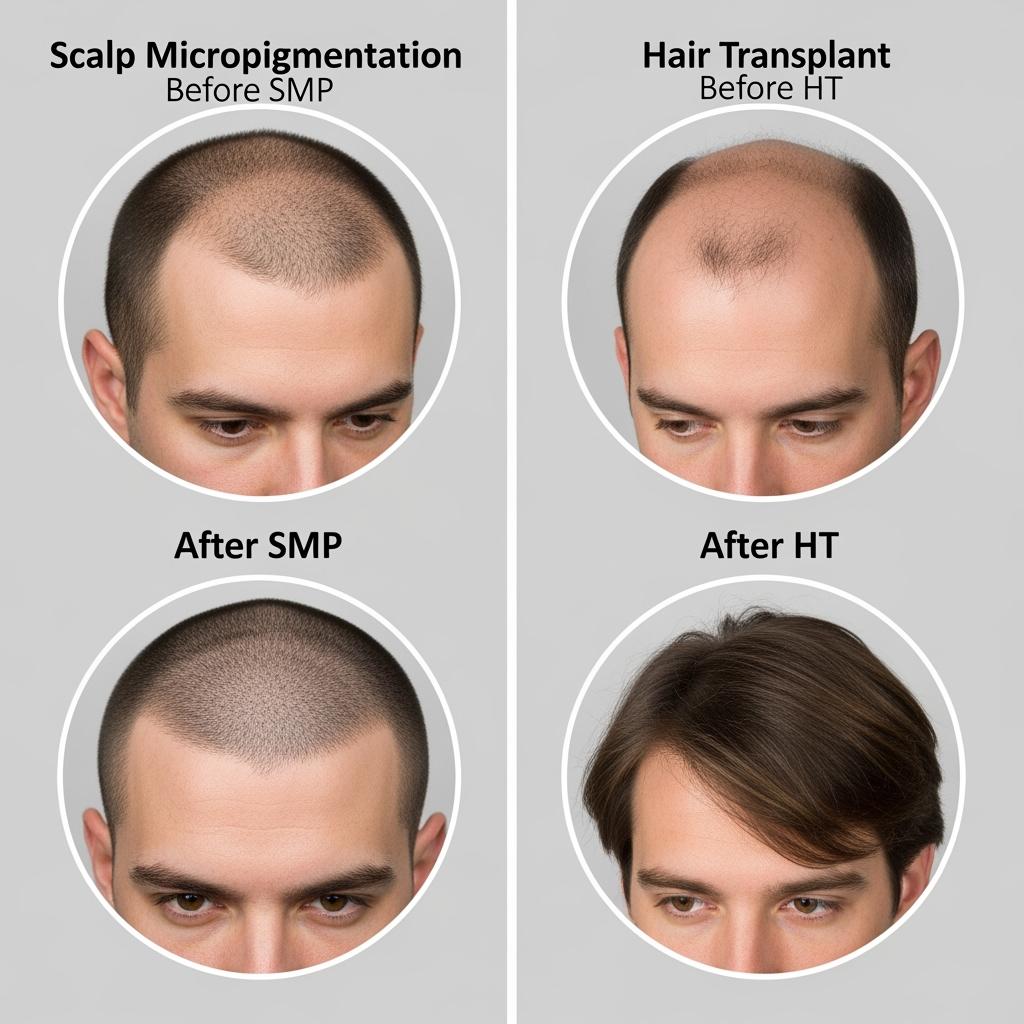
A scalp micropigmentation consultation is a planning visit, not the treatment. At AzScalpDoctor, Francisco Ahumada looks at your scalp in Mesa, shows healed examples, and tells you how many sessions he expects. No pigment is placed unless you have already agreed to start a session. You can leave without booking.
The studio is at 1061 N Dobson Rd Ste 107, Mesa, AZ 85201. Hours are Monday through Saturday, 9am to 5pm. Phone is (480) 599-0868. If you want the procedure explained first, read what scalp micropigmentation is, then bring your questions to the chair.
What a scalp micropigmentation consultation is checking
Francisco is not selling a hairstyle from a chart. He is checking whether pigment can look like hair on your skin.
He looks at the pattern of loss. A front line, a crown, diffuse thinning, and a surgical scar are not the same job. He looks at skin tone, because the dot has to sit next to your skin without turning blue-gray. He looks at existing hair, so density work can hide between hairs you still have. He looks at scars. Raised or very shiny scar tissue does not always hold pigment the way normal scalp does.
He also asks how you live. Daily sun in the East Valley, swimming, gym hats, and tight headwear change early aftercare. If your shedding started suddenly, or you have a scalp disease that is still active, cosmetic pigment is the wrong first step. A doctor should sort that out before an artist draws a plan.
What you should bring
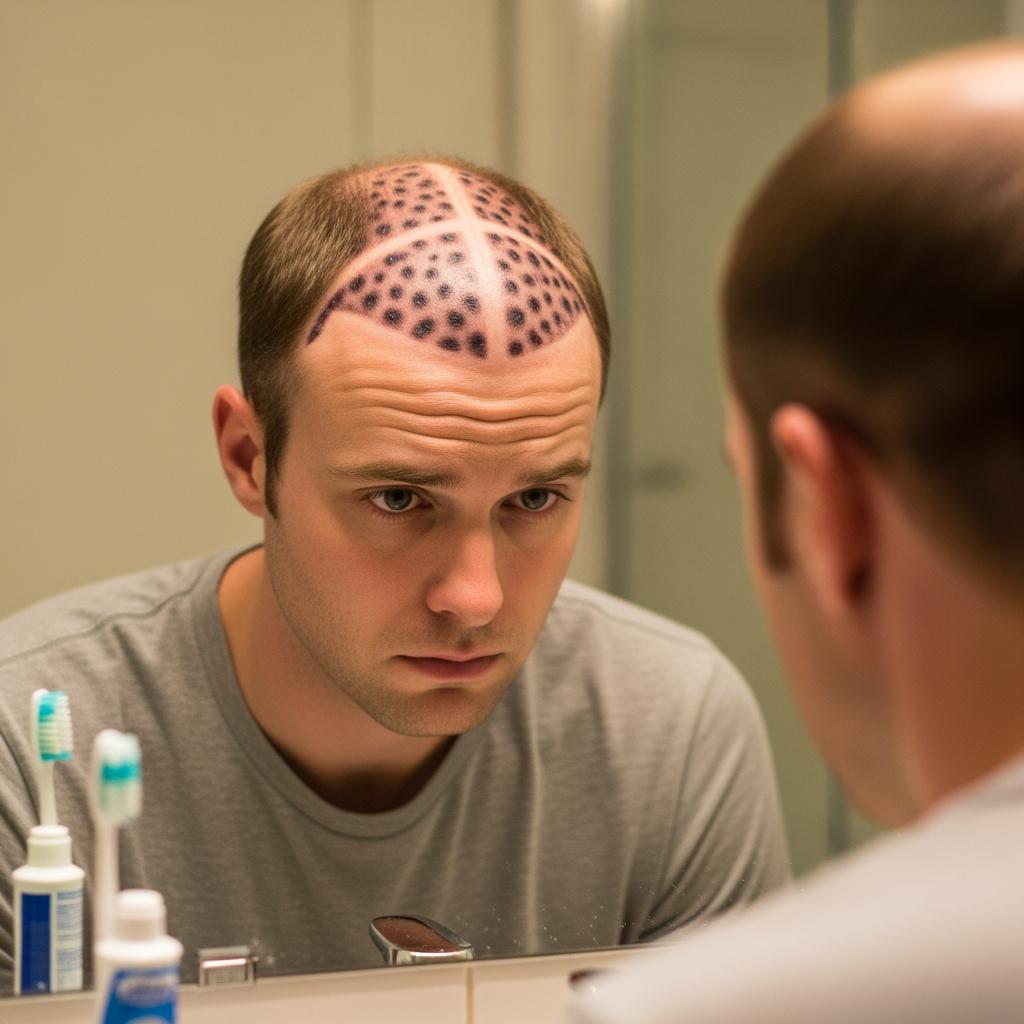
Come with your hair in its normal state. Do not shave to the skin the morning of a consult if that is not how you usually wear it. The artist needs the baseline.
Older photos help. A picture from a few years ago shows where the line used to sit and how fast the loss moved. A phone photo is enough. You do not need a studio shoot.
Write your questions down. People forget them once the mirror is in front of them. Useful questions are simple. How many sessions? What do healed photos of a similar pattern look like? What does the shade do in direct sun? What would make you tell me not to start?
Mention medicines that affect bleeding or healing, a history of keloid scars, and any SMP you already have. Old pigment that was placed too deep is harder to correct than a first treatment. Hiding that fact wastes the visit.
What you should see, and what you should ignore
Ask for healed photos. Fresh SMP is darker. The color softens as the skin calms. A portfolio of only day-of photos hides that change. If you are deciding whether the result is worth the cost and the upkeep, use the worth-it checklist alongside the photos, not instead of them.
Ignore a promise of a perfect match to a celebrity hairline. Your face, age, and remaining hair set the limit. A low, straight line on a mature face looks drawn. The hairline guide explains why the edge should be slightly irregular. You should hear that in the consult, not only on a blog.

The plan you should leave with
A useful consult ends with four facts. The goal is hairline, density, scar camouflage, or a mix. The expected plan is two to four sessions, not one. The sessions are spaced so the skin can settle before the next pass. The quote matches the area being treated, not a vague package name.
You should also know what the first days look like. The dots will look bold. You will limit sweat, swimming, and direct sun for a short window. That is aftercare, not a permanent rule. Long-term, pigment can fade, especially with desert UV. A future touch-up is normal. A claim that the work never changes is not.
If you want the session math in Indonesian, the panduan jumlah sesi walks through the same two-to-four range. The English consult is where that range becomes a plan for your scalp.
When the consult should slow you down
Do not start if the artist will not show healed work. Do not start if the only answer on pain, shade, or sessions is “you will love it.” Do not start if you are in the middle of a sudden shed and nobody has looked for a medical cause.
SMP does not regrow hair. It does not remove a scar. It changes what the eye reads as hair or as skin. If that is the result you want, the consult is the right next step. If you want grafts, a surgeon is the right next step. Mixing the two decisions in one sales pitch helps the seller, not you.
How session one differs from the consult
If you book treatment, session one starts by confirming the plan from the consult. The hairline or the density zone is drawn first. You look in the mirror before pigment goes in. That pause is the last easy moment to move a line. After pigment is placed, changes are slower.
The work itself is a long series of small dots. It is not a single pass with a stamp. You can ask for a break. When the session ends, the color will look stronger than the healed result. You leave with written aftercare, not a verbal reminder you will forget in the parking lot. Later sessions exist because that healed color has to be seen before the plan is finished.
Questions people ask before they book
Is pigment applied during the consultation?
Not on a consult-only visit. Pigment starts when you agree to a treatment session.
How long should I plan to be there?
Plan on a focused visit, not a full treatment day. The point is the scalp check, the photos, and the session count. If you already booked session one, that day is longer because the work itself takes time.
Do I have to decide the same day?
No. Take the plan home. Compare it with healed photos and with your calendar. Two to four sessions means you need real dates, not a same-day impulse.
Where is the studio?
1061 N Dobson Rd Ste 107, Mesa, AZ 85201. Monday through Saturday, 9am to 5pm. Call (480) 599-0868.
Come with the scalp you actually have
A scalp micropigmentation consultation works when both people can see the same facts. Your pattern, your skin, healed examples, and a two-to-four session plan. Francisco Ahumada does that at the Mesa studio. Call or write before you come if you want to ask whether your case is hairline, density, or a scar. Then judge the answer against the photos, not against a promise.
Tinggalkan Balasan