Artists and clients use the Norwood scale SMP conversation to describe male pattern hair loss before a single dot of pigment is placed. The scale does not diagnose you, and it is not a price menu by itself. It is a shared map: how far the hairline has moved, how open the crown is, and how much scalp SMP needs to rebuild visually.
At AzScalpDoctor in Mesa, Arizona, that map shapes hairline height, density, and how many sessions a plan should include. This guide explains each practical stage and how SMP is designed around it.
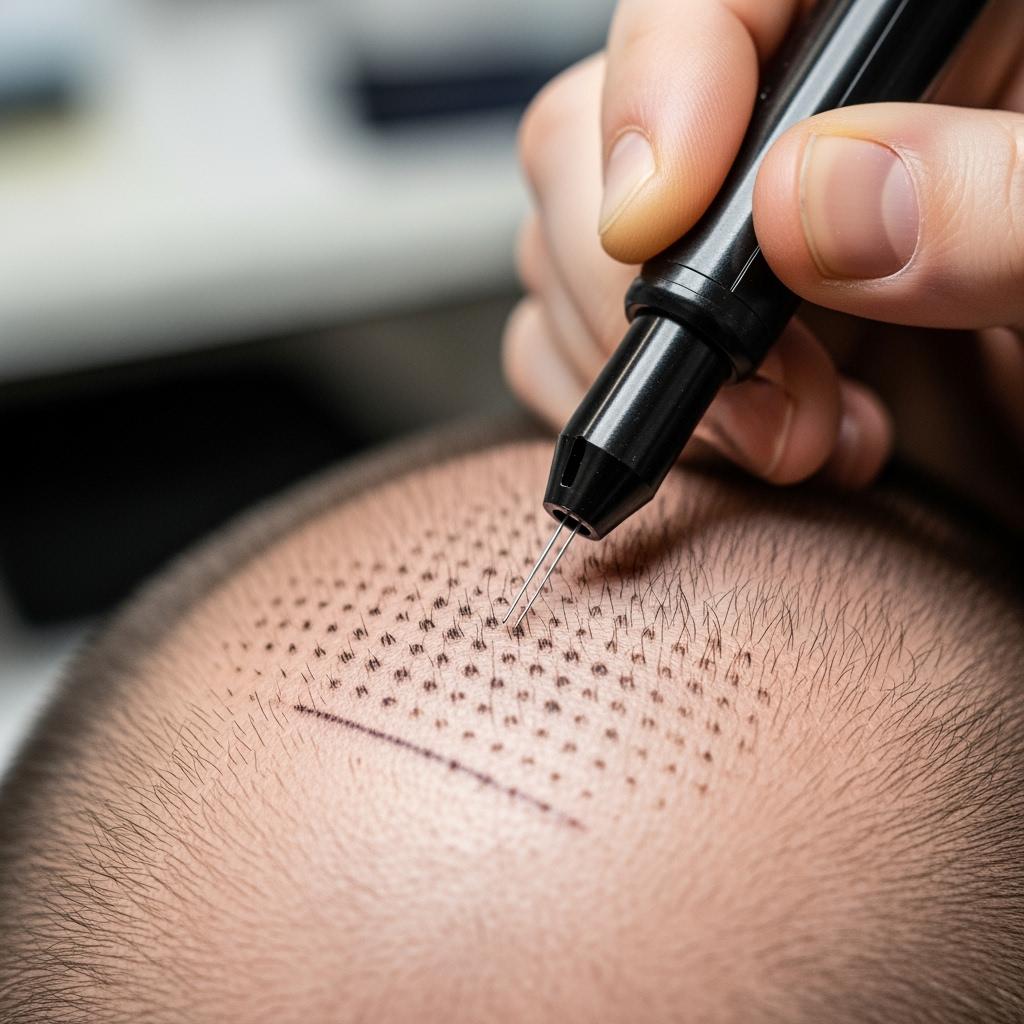
What the Norwood Scale Actually Measures
The Norwood (or Hamilton-Norwood) scale is a visual chart of common male pattern baldness. Early stages show temple recession. Middle stages add crown thinning. Later stages leave a narrow bridge of hair, then a mostly bald scalp with a donor fringe. SMP does not move you backward on the scale by growing hair. It changes how that stage looks.
If you are new to the procedure, start with What Is Scalp Micropigmentation?
Norwood 2 to 3: Hairline and Temples
These stages are mostly about the front. Temples deepen and the hairline rises, while the crown may still look solid. Norwood scale SMP work here is often a hairline restoration: soften the corners, restore a believable shape, and avoid dragging the line down into a teenage outline that will not match your age.
Sessions are usually fewer than a full scalp because the surface area is smaller. The risk is overbuilding. A hard, low line looks less natural than a slightly higher line with irregular micro-hairs. Realism standards are covered in does scalp micropigmentation look real.
Norwood 4 to 5: Front Plus Crown
By stage 4 or 5, the front and the crown both show scalp. Some men still have a bridge of hair between them. Norwood scale SMP planning has two choices. One is a buzz-cut simulation across both zones so the contrast matches. The other is density only in the thinner patches if you keep longer hair on top.
Mixing those goals without a plan creates a dark front and a shiny crown, or the reverse. Your artist should say which look the pigment is building before session one.
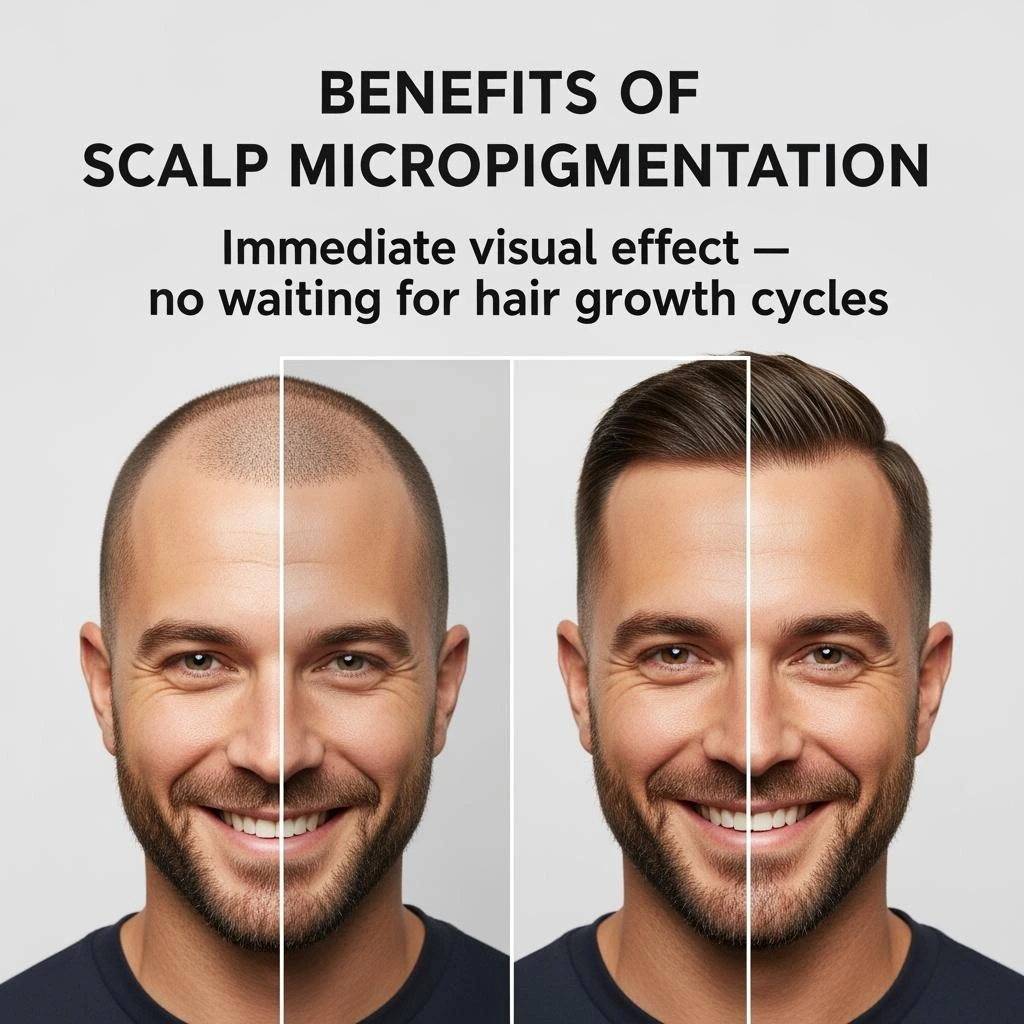
Norwood 6 to 7: Full Scalp Simulation
Later stages leave little hair on top. The usual SMP goal is a clean, shaved-head look: even follicle impressions from the hairline through the crown, fading naturally toward the sides. This is the largest canvas, so it needs the most time and the most restraint. Packing every millimeter solid black is what makes a scalp look painted.
Donor hair on the sides still matters. Pigment should meet that fringe without a sharp border. If a transplant scar sits in the donor zone, that is a separate blend. See hair transplant scar camouflage.
How Many Sessions Each Stage Usually Needs
Most Norwood scale SMP plans still land in a two to four session range. Early hairlines can finish toward the low end. Full scalps and scar blends often need the high end because pigment is layered after the skin settles. One session is a start, not a finished density.
Healing and sun change how long the look stays crisp. Read how long does scalp micropigmentation last and the aftercare guide.
The Scale Is Not a Quote
Two clients can both be called Norwood 5 and need different work. Head size, hair color, skin tone, and whether you shave daily all change the plan. Use the scale to describe the pattern, then let the consultation set the outline and the fee. Pricing factors are explained in hair tattoo cost.
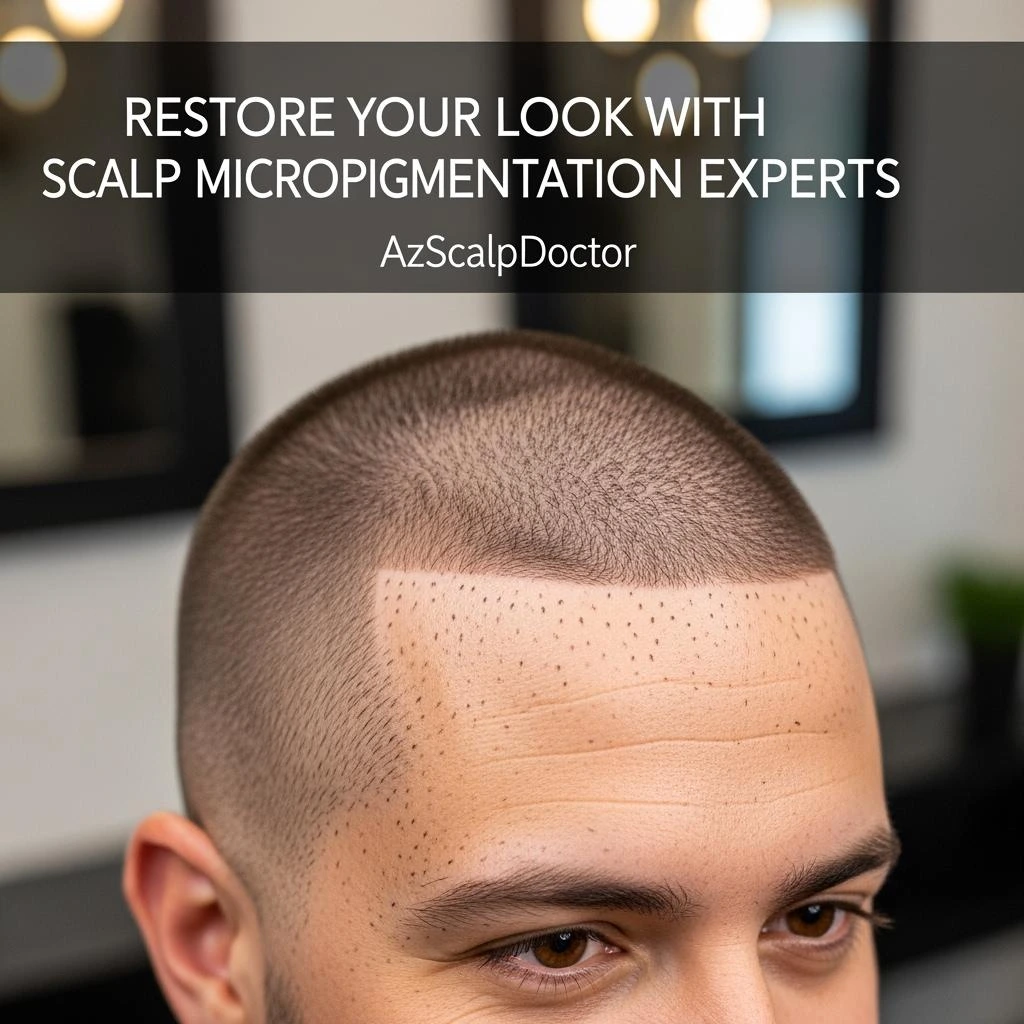
What If Your Loss Does Not Fit the Chart?
Diffuse thinning, alopecia patches, and traction loss do not follow a neat Norwood number. Forcing a stage label can lead to the wrong design. Patchy loss needs a different plan, described in SMP for alopecia. Women usually are not graded on this male chart at all. Their density work is outlined in SMP for women thinning hair.
SMP Versus Surgery at Each Stage
Early Norwood stages sometimes have enough donor hair for a transplant. Later stages often do not, which is why many men choose SMP for a shaved look instead of chasing limited grafts. Some use both. The tradeoffs are in scalp micropigmentation vs hair transplant.
How to Talk About Your Stage in a Consult
- Bring daylight photos of the hairline, mid-scalp, and crown.
- Say whether you want a buzz cut or to keep length.
- Mention any transplant scars.
- Ask which Norwood pattern the artist sees, and why.
- Confirm session count before you book.
Clients in the East Valley can review local studio details in the Mesa SMP guide. The same planning applies if you travel from Phoenix. The stage of loss matters more than the freeway you take.
FAQ
Can SMP make a Norwood 6 look like a Norwood 2 with long hair?
No. SMP mimics follicles or density. It does not grow hair you can comb long. A shaved or very short style is the honest match for advanced stages.
Should I wait until my loss stops?
You can treat the current pattern and adjust later. If loss is fast, your artist may design a hairline that still looks right if the native hair recedes a little more.
Is the Norwood scale used for women?
It is a male pattern chart. Women are assessed by part width, temples, and overall density instead.
Final Takeaway
Norwood scale SMP planning is how a good artist keeps the result honest: the right hairline height, the right coverage, and enough sessions for that amount of scalp. The number on the chart is a starting point. Your haircut, skin tone, and photos decide the rest.
Bring those photos to AzScalpDoctor in Mesa. We will name the pattern we see and show how pigment would rebuild it before any session begins.
Tinggalkan Balasan