Penulis: Francisco Ahumada

  • Healthy Hair: Preventing Damage and Keeping Your Hair Strong

    Having healthy hair isn’t just about looking good — it’s a reflection of your overall well-being, daily habits, and the way you protect your hair from damage. Every day, your hair is exposed to heat, chemicals, friction, environmental stress, and improper routines that slowly weaken its structure. Over time, the damage becomes visible: split ends, dryness, frizz, breakage, thinning, and dullness.

    This complete guide will help you understand how to maintain truly healthy hair and prevent damage before it starts. Whether your hair is straight, wavy, curly, chemically treated, or naturally thick, these strategies form the foundation for strong, shiny, and resilient hair.


    Why Hair Gets Damaged in the First Place

    Hair damage occurs when the cuticle, the protective outer layer of the hair shaft, becomes weakened or lifted. Once the cuticle breaks down, moisture escapes, proteins deteriorate, and the inner layers of the hair become vulnerable.

    The most common causes include:

    1. Heat Styling

    Blow dryers, flat irons, and curling irons reach temperatures as high as 230°C (450°F). This heat breaks down keratin and strips moisture, leading to brittleness.

    2. Chemical Treatments

    Bleaching, coloring, perming, relaxing, and straightening treatments alter your hair’s natural structure. While they can look beautiful, they weaken protein bonds dramatically.

    3. Mechanical Damage

    Brushing aggressively, sleeping with wet hair, tight hairstyles, and friction from towels all cause breakage.

    4. Environmental Stressors

    UV rays, pollution, chlorine, and saltwater slowly dry out and roughen the hair shaft.

    5. Poor Haircare Routine

    Using harsh products, skipping conditioner, or washing too frequently weakens hair over time.

    Understanding the root causes is the first step toward maintaining healthy hair long-term.


    Signs Your Hair Is Damaged

    Before damage becomes severe, your hair will display early symptoms. Watch for:

    • Rough, dry texture
    • Excessive frizz
    • Lack of shine
    • Split ends
    • Tangling easily
    • Hair breaking when brushed
    • Weak or stretchy hair when wet
    • Increased shedding

    If several of these sound familiar, it’s time to adopt preventive habits immediately.


    How to Prevent Hair Damage: The Ultimate Healthy Hair Routine

    Below are the essential steps proven to protect hair, stop breakage, and keep hair strong.


    1. Reduce Heat Styling to a Minimum

    Heat is the number one cause of preventable hair damage.

    Tips to minimize heat damage:

    • Air-dry hair whenever possible
    • Use heat tools on the lowest effective temperature
    • Never straighten or curl hair without heat protectant
    • Choose ceramic tools, which distribute heat more evenly
    • Limit heat styling to 1–2 times per week

    A quality heat protectant forms a barrier on the cuticle, reducing moisture loss and preventing protein degradation.


    2. Protect Your Hair From Chemical Damage

    Coloring and bleaching can be safe — but only with proper care.

    How to reduce chemical damage:

    • Get color treatments done by professionals
    • Avoid overlapping bleach on previously lightened hair
    • Space chemical treatments at least 8–12 weeks apart
    • Use bond-repair products after bleaching
    • Deep-condition weekly

    If your hair is already weakened, choose glosses, demi-permanent dyes, or natural alternatives instead of harsh bleaching.


    3. Strengthen the Hair With Protein & Moisture Balance

    Healthy hair needs both moisture and protein. Too much of one and too little of the other leads to breakage.

    Protein treatments help:

    • Strengthen weak strands
    • Restore elasticity
    • Repair internal bonds

    Moisture treatments help:

    • Hydrate dry hair
    • Reduce frizz
    • Improve softness and shine

    How to balance:

    • If hair is dry → add moisture
    • If hair is weak or stretchy → add protein
    • If hair breaks easily → combine both

    Using a hydrating mask one week and a strengthening mask the next keeps hair stable.


    4. Avoid Mechanical Damage (Brushing, Towels, Hairstyles)

    Mechanical damage is often overlooked, but it contributes heavily to breakage.

    Ways to prevent mechanical damage:

    • Use a wide-tooth comb on wet hair
    • Brush starting from the ends, then move upward
    • Use microfiber towels instead of cotton
    • Avoid tight ponytails, braids, or buns
    • Don’t sleep with wet hair

    Switching to silk pillowcases reduces friction and keeps hair smoother.


    5. Choose the Right Shampoo and Conditioner

    Not all products work for every hair type.

    Healthy hair shampoo tips:

    • Avoid sulfate shampoos if your hair is dry or damaged
    • Use clarifying shampoo only once per month
    • Choose moisturizing formulas for dry hair
    • Strengthening formulas for weak hair

    Conditioner is non-negotiable:

    It seals the cuticle, prevents tangling, and locks in moisture. Always condition the mid-lengths to ends — never the scalp unless using a scalp conditioner.


    6. Protect Hair From UV and Environmental Damage

    Just like your skin, your hair needs protection from the sun.

    How to protect your hair:

    • Use UV-protection sprays
    • Wear hats during strong sunlight
    • Rinse hair after swimming
    • Apply leave-in conditioner before going outdoors

    UV rays weaken protein bonds, causing dryness and color fading.


    7. Keep Your Scalp Healthy

    Healthy hair starts with a healthy scalp. Irritation, buildup, or blocked follicles can stop hair from growing properly.

    How to maintain scalp health:

    • Exfoliate scalp once per week
    • Use lightweight oils (tea tree, rosemary)
    • Avoid heavy products that clog follicles
    • Treat dandruff or oil imbalance promptly

    A balanced scalp produces stronger, healthier strands.


    8. Maintain Nutrition for Strong Hair

    Your hair’s growth and strength depend on the nutrients you consume.

    Key nutrients for healthy hair:

    • Protein – building block of hair
    • Biotin – strengthens hair growth
    • Omega-3 fatty acids – reduce inflammation
    • Iron – prevents shedding
    • Zinc – supports scalp health
    • Vitamin D – essential for follicle activity

    A balanced diet or supplementation supports long-term hair health.


    9. Schedule Regular Trims

    Even the healthiest hair develops split ends over time.

    Trim every:

    • 6–8 weeks if your hair is damaged
    • 10–12 weeks for healthy hair

    Trimming prevents split ends from traveling up the hair shaft and causing more damage.


    10. Use Protective Styles When Needed

    Protective styles reduce daily friction and preserve hair moisture.

    Great examples include:

    • Loose braids
    • Low buns
    • Twists
    • Heatless curls
    • Silk wraps

    Avoid extremely tight styles that pull on the roots.


    11. Hydrate Hair With Oils and Leave-in Conditioners

    These products act like shields against dryness and friction.

    Best oils for healthy hair:

    • Argan oil
    • Coconut oil
    • Jojoba oil
    • Olive oil
    • Castor oil

    Use sparingly — too much oil can clog the scalp or make hair greasy.


    How to Tell If Your Hair Is Getting Healthier

    As you follow consistent damage-prevention habits, you’ll notice:

    • Less breakage when brushing
    • More shine and smoothness
    • Better curl pattern (for curly hair)
    • Reduced frizz
    • Stronger strands
    • Easier styling
    • Fewer split ends

    Healthy hair is soft, flexible, and resilient.


    Frequently Asked Questions About Healthy Hair & Damage Prevention

    Can damaged hair be completely repaired?

    Only early damage can be repaired. Severe damage can be improved but not reversed — trimming is necessary.

    How often should I deep-condition?

    Weekly for damaged hair, biweekly for healthy hair.


    Final Thoughts: Healthy Hair Starts With Prevention

    Healthy hair isn’t just about expensive products — it’s about everyday choices. By protecting your hair from heat, chemicals, friction, and environmental stress, you can dramatically reduce damage and keep your hair looking strong, shiny, and beautiful.

    Consistency is key.
    When you combine proper care, protection, nutrition, and professional guidance, healthy hair becomes not just achievable — but your new normal.
  • Hair Treatment Guide: Repairing, Restoring & Revitalizing Your Hair

    Hair Treatment Guide: Repairing, Restoring & Revitalizing Your Hair

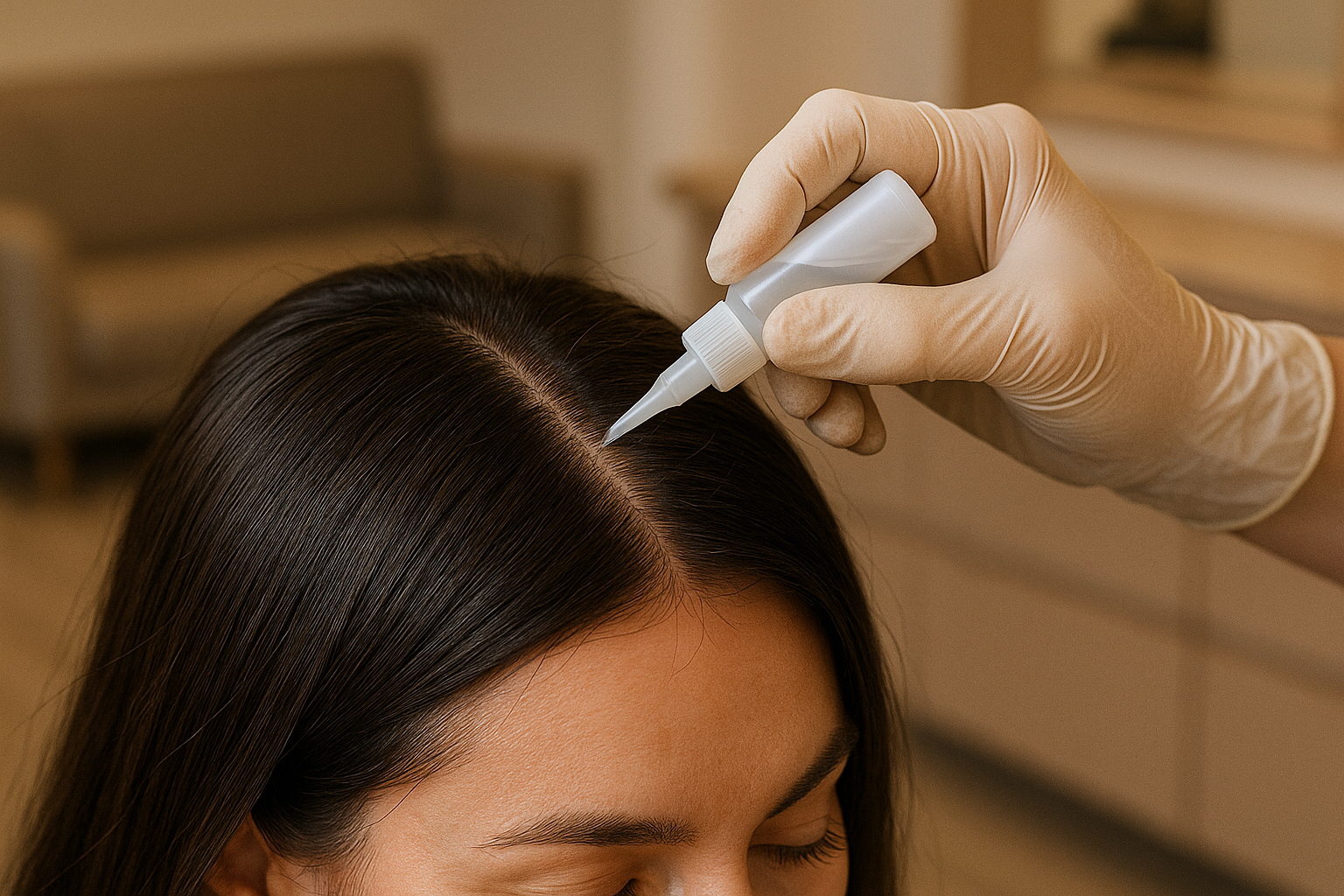
    Maintaining healthy hair is not as simple as using shampoo and conditioner. Daily exposure to heat styling, pollution, chemical coloring, lack of nutrition, and stress can cause significant damage over time. When your hair becomes dry, brittle, or prone to breakage, a proper hair treatment Guide is essential to restore moisture, strength, and shine.

    Hair Treatment Guide: Repair, Restore & Revitalize

    This comprehensive guide will help you understand everything about hair treatments—what they are, the best types, how often you need them, how much they cost, and how to maintain results long-term. Whether you struggle with damaged hair, scalp issues, or thinning strands, the right treatment can completely transform your hair’s health.

    Read More: Restore Your Look with Scalp Micropigmentation Experts


    What Is Hair Treatment?

    A hair treatment is a specialized procedure designed to address specific hair concerns such as damage, dryness, frizz, thinning, or scalp issues. Unlike basic hair care, hair treatments penetrate deeper into the hair shaft or scalp to repair structural damage and deliver targeted nutrients.

    Hair treatments are recommended for individuals who experience:

    • Dry, brittle strands
    • Split ends that return quickly
    • Breakage from coloring or heat
    • A flaky, oily, or itchy scalp
    • Hair thinning or lack of volume
    • Severely damaged hair due to chemical processes

    Professional treatments are far more effective than at-home products because they use concentrated formulas and deeper penetration techniques that directly strengthen the hair’s internal structure.


    Types of Hair Treatment Guide You Should Know

    Not all hair concerns are the same, which is why there are multiple types of hair treatments. Each one is designed to solve a different problem. Here are the most effective and popular options available today:


    1. Keratin Treatment Guide

    A keratin treatment is one of the most in-demand smoothing procedures. It works by infusing natural keratin protein into the hair cuticle, making the hair smoother, straighter, and shinier.

    Benefits:

    • Reduces frizz
    • Adds silky shine
    • Smooths rough hair texture
    • Makes hair easier to style
    • Can last 3–5 months with proper aftercare

    Keratin treatment is ideal for people with frizzy, unruly, or wavy hair who want a smooth, polished look without permanent straightening.

    Hair Treatment Keratin Versi AloDoker


    2. Hair Repair Treatment Guide

    A hair repair treatment focuses on rebuilding damaged hair from the inside out. It often uses bond-building ingredients, protein masks, deep conditioners, and moisture-rich formulas.

    Benefits:

    • Repairs internal hair bonds
    • Strengthens weak or broken strands
    • Restores elasticity and softness
    • Prevents further breakage

    This treatment is most suitable for chemically damaged hair—especially after bleaching, coloring, perming, or excessive heat styling.


    3. Scalp Treatment Guide

    A scalp treatment targets the root of hair health: the scalp. When the scalp is balanced, nourished, and free of buildup, hair grows stronger and healthier.

    Benefits:

    • Controls oil production
    • Relieves dandruff and flakiness
    • Removes product buildup
    • Improves blood circulation
    • Reduces itchiness and inflammation

    Scalp treatments are especially useful for individuals with oily scalp, dry scalp, dandruff, or early-stage hair thinning.


    4. Hair Growth Treatment Guide

    Hair growth treatments focus on stimulating the follicles and improving density. They may include topical formulas, peptide serums, microneedling, PRP therapy, or SMP illusion density.

    Benefits:

    • Encourages new hair growth
    • Thickens weak strands
    • Boosts scalp health
    • Reduces shedding

    This treatment is ideal for individuals experiencing mild to moderate thinning, stress-related hair loss, or weakened follicles.


    5. Hair Botox Treatment Guide

    Despite the name, hair botox does not use actual Botox. Instead, it is a restorative treatment packed with collagen, proteins, vitamins, and amino acids.

    Benefits:

    • Deeply hydrates dry hair
    • Reduces frizz
    • Restores shine
    • Repairs damaged cuticles

    Hair botox is recommended for dry, brittle, or aging hair that needs deep nourishment.


    Signs You Need a Professional Hair Treatment Guide

    Not sure if you need a hair treatment? Your hair and scalp often show clear signs:

    1. Dry or Brittle Hair

    Your hair feels rough, lacks shine, and absorbs moisture quickly.

    2. Split Ends That Reappear Quickly

    Even after trimming, split ends return within weeks.

    3. Excessive Breakage

    Hair snaps easily when brushing or washing.

    4. Chemical or Color Damage

    Bleaching, coloring, or perming weakens hair fibers significantly.

    5. Oily, Itchy, or Flaky Scalp

    Indicates scalp imbalance, buildup, or dandruff.

    When these symptoms persist, a professional hair treatment becomes essential to restore balance and strengthen the hair.


    Best Hair Treatment Guide for Damaged Hair

    Damaged hair requires targeted repair. The ideal treatment depends on the type and severity of the damage:

    For Heat Damage

    → Protein and moisture-repair masks
    → Bond-building treatments

    For Chemical Damage (Bleaching/Coloring)

    → Hair repair treatment
    → Hair botox
    → Olaplex-style bond repair

    For Dry, Brittle Hair

    → Deep hydration treatment
    → Moisture infusion therapy

    For Structural Damage

    → Keratin or amino acid smoothing

    The best hair treatment for damaged hair is one that rebuilds the hair structure while restoring hydration and elasticity.


    How Often Should You Get a Hair Treatment?

    The ideal frequency depends on the treatment type:

    • Keratin treatment → every 3–5 months
    • Scalp treatment → every 2–4 weeks
    • Hair repair treatment → weekly or biweekly
    • Hair botox → every 2–3 months
    • Hair growth treatments → depend on the method (often monthly)

    A general rule:
    If your hair is severely damaged, more frequent treatments may be required until the structure improves.


    Hair Treatment vs Hair Replacement: What’s the Difference?

    These two terms are often confused, but they serve completely different purposes:

    Hair Treatment

    • Repairs, strengthens, or hydrates natural hair
    • Improves scalp health
    • Reduces damage
    • Enhances appearance
    • Helps prevent hair loss

    Hair Replacement

    • Does not repair natural hair
    • Includes wigs, hair systems, hair transplants, or scalp micropigmentation
    • Focuses on appearance, not hair health

    If your hair is thinning, a combination of both treatment and replacement may provide the best results.


    Cost of Hair Treatments

    The cost varies based on the type of treatment, length of hair, product quality, and location.

    Estimated Prices:

    • Keratin treatment: $150–$400
    • Hair repair treatment: $40–$150
    • Scalp treatment: $50–$120
    • Hair botox: $120–$250
    • Hair growth programs: $100–$600 per session (depending on method)

    Cost Factors:

    • Hair length and thickness
    • Level of damage
    • Stylist or clinic experience
    • Geographic location

    Searching for “hair treatment cost in [your city]” provides a more accurate estimate for your area.


    How to Maintain Results After a Hair Treatment Guide

    To make your treatment last longer, follow these maintenance tips:

    1. Use Sulfate-Free Products

    Sulfates strip moisture and cause dryness, shortening treatment longevity.

    2. Reduce Heat Styling

    Too much heat reverses the benefits of smoothing and repair treatments.

    3. Protect Hair While Sleeping

    Use a silk pillowcase or wrap your hair to reduce friction.

    4. Schedule Regular Follow-Up Treatments

    Consistency helps build and maintain healthy hair over time.

    5. Avoid Saltwater and Chlorine

    Chlorine and salt can reduce treatment effectiveness, especially keratin.


    FAQs About Hair Treatments Guide

    What is the best treatment for extremely damaged hair?

    Bond-building repair treatments combined with deep hydration are typically the best solution.

    Can hair treatment fix split ends permanently?

    No treatment can permanently fix split ends. Only trimming removes them, but treatments help prevent new ones from forming.

    Is keratin treatment safe for all hair types?

    Keratin is generally safe, but extremely fine or fragile hair may require a lighter formula.

    How long does a hair treatment last?

    Depending on the treatment type, results can last anywhere from 2 weeks to 5 months.

    Do scalp treatments help with hair loss?

    Yes, scalp treatments improve circulation, reduce inflammation, and remove buildup—factors that support healthier hair growth.


    Final Thoughts: Choosing the Right Hair Treatment for You

    Choosing the right hair treatment depends on your unique hair condition, daily habits, and long-term hair goals. If your hair is damaged, dry, brittle, frizzy, or thinning, a professional treatment can quickly restore strength and shine. Keratin treatments smooth the hair, scalp treatments support growth, hair repair treatments rebuild structure, and hair botox deeply nourishes every strand.

    Read More: Information About Hair Transplant Guide 2025 With AzScalp

    For best results, consult with a qualified stylist or hair specialist who can assess your hair condition and create a tailored treatment plan. When combined with the right aftercare, hair treatments can completely transform your hair—helping you achieve healthier, stronger, and more beautiful strands every day.

  • Can I Have Two Hair Transplants? Understanding Second Procedures

    For many people, undergoing a hair transplant is a life-changing experience — restoring confidence, youth, and a natural appearance. But over time, you might wonder:
    👉 Can I have a two hair transplants?

    The short answer is yes, you can.
    A second or even third procedure is possible and quite common, especially as hair loss progresses naturally over the years.

    At AZ Scalp Doctor, Arizona’s trusted hair-restoration clinic, we perform revision and secondary transplants for patients who want more density, better coverage, or refinements after their first procedure.

    Can I Have Two Hair Transplants? | AZ Scalp Doctor Arizona
    Can I Have Two Hair Transplants?

    This article explains when a second transplant is appropriate, how it works, and what you should consider before scheduling another surgery.


    Why People Consider a Second Hair Transplant

    There are several valid reasons patients may opt for a second session:

    1. Progressive Hair Loss

    Hair loss is a continuous process. Even after a successful first transplant, untreated areas may continue to thin, creating new gaps or uneven density. A second session can restore balance and complete the aesthetic harmony.

    2. Desire for Higher Density

    Sometimes the initial transplant prioritizes coverage over density. Once healing and regrowth stabilize, a follow-up procedure can add more grafts for a fuller, thicker look.

    3. Refinement or Hairline Adjustment

    Patients may request a second procedure to refine the hairline, correct symmetry, or transition from an older, less natural design to a more modern and softer look.

    4. Repair from Previous Unsatisfactory Results

    If a previous procedure (done elsewhere) produced visible scarring, pluggy grafts, or unnatural angles, AZ Scalp Doctor specializes in corrective transplants using advanced FUT, FUE, or hybrid techniques.

    5. Combination of FUT + FUE

    Some patients first undergo FUT for maximum graft yield, then later choose FUE for refinement or scar coverage — a strategic two-stage approach for comprehensive restoration.


    How Long Should You Wait Before a Second Hair Transplant?

    Patience is essential.
    At AZ Scalp Doctor, we recommend waiting at least 12–15 months after your first transplant before considering another. This timeframe allows:

    • Full growth of transplanted hair
    • Stabilization of shedding patterns
    • Clear assessment of density and natural direction
    • Donor-area recovery and healing

    In some cases, minor touch-ups (small graft additions) can be done sooner — but only after a detailed evaluation by a qualified surgeon.


    What Happens During a Second Hair Transplant

    1️⃣ Consultation and Scalp Evaluation

    The process begins with a detailed review of your first procedure: technique used (FUT or FUE), donor availability, graft survival, and hair-loss progression.

    At AZ Scalp Doctor, we use digital scalp mapping and trichoscopy to analyze density and predict future hair-loss patterns.

    2️⃣ Donor Area Assessment

    The most critical step in a second transplant is determining how many healthy follicles remain in the donor area.

    • FUT patients often have sufficient grafts left for FUE extraction later.
    • FUE-only patients may require body-hair extraction (beard or chest) for additional grafts.

    3️⃣ Technique Selection

    Depending on scalp condition and goals, our surgeon may recommend:

    • Second FUT (if scalp laxity allows)
    • FUE (to minimize scarring and target small zones)
    • Hybrid FUT + FUE for maximum graft yield

    4️⃣ Implantation & Design

    The new grafts are implanted strategically around existing hair to increase density without damaging old follicles.
    Special care is taken to match angle, direction, and texture for a seamless result.


    FUT vs FUE in a Second Hair Transplant

    The Difference Between FUT and FUE Hair Transplant
    TechniqueWhen It’s UsedKey Advantage
    FUT (Follicular Unit Transplantation)When a large number of grafts are neededEfficient graft yield from donor strip
    FUE (Follicular Unit Extraction)When donor scalp is tight or previous FUT scar existsMinimal scarring, flexible targeting
    Hybrid FUT + FUEWhen maximizing both density & refinementCombines high yield with scar coverage

    The Difference Between FUT and FUE Hair Transplant


    How Many Hair Transplants Can You Have?

    In theory, most patients can undergo two to three transplant sessions safely, provided:

    • The donor area remains healthy
    • There’s enough follicular density
    • Each procedure is spaced by at least 12 months

    However, donor supply is finite. A professional surgeon must balance present density with future hair-loss progression to avoid overharvesting.

    At AZ Scalp Doctor, our approach is conservative and long-term.
    We plan for future coverage, ensuring your donor site remains viable if you need another session later in life.


    Second Hair Transplant Success Rate

    Success depends on surgical expertise, donor condition, and aftercare.
    At AZ Scalp Doctor, we consistently achieve graft survival rates above 95%, even in secondary or repair cases.

    Factors influencing success include:

    • Proper graft extraction technique
    • Minimal trauma to existing hair
    • Optimal hydration during surgery
    • Strategic placement avoiding previous scar tissue

    Before and After: What to Expect from a Second Procedure

    StageWhat Happens
    Week 1Mild swelling and redness; scabs form around grafts
    Week 2–3Shedding phase (normal “shock loss”)
    Month 3–5Early new growth visible
    Month 6–9Noticeable density increase
    Month 12+Full results achieved, blending seamlessly with older grafts

    Patients often report that their second transplant heals faster and feels more comfortable since they already know the process.


    Can a Second Hair Transplant Fix a Failed First Surgery?

    Yes — and this is one of our specialties at AZ Scalp Doctor.
    A poorly executed transplant can be corrected through:

    • Scar Revision: Using FUE grafts to camouflage visible scars
    • Hairline Redesign: Adjusting angles and density for natural flow
    • Density Restoration: Filling patchy or thin zones

    With advanced tools and artistry, even older or unnatural results can be dramatically improved.


    Is It Risky to Have Two Hair Transplants?

    When performed by an experienced, board-certified surgeon, a second transplant is very safe.
    The main risks arise only when:

    • The donor area is overharvested
    • interval between surgeries is too short
    • second procedure is done without proper planning

    At AZ Scalp Doctor, we mitigate all risks through detailed pre-operative assessments, precise extraction angles, and post-care monitoring.


    How Much Does a Second Hair Transplant Cost in Arizona?

    Prices vary based on technique and graft count.
    Typical ranges:

    • FUE: $4,000 – $9,000
    • FUT: $3,000 – $7,000
    • Hybrid FUT + FUE: Custom quote

    If it’s a corrective procedure, additional costs may apply for scar revision or density equalization.
    We provide transparent estimates and flexible financing to make second sessions affordable.


    Recovery and Aftercare Tips

    1. Keep scalp elevated and clean for 48 hours.
    2. Avoid exercise and sweating for 7 days.
    3. Don’t pick scabs or rub grafts.
    4. Use prescribed shampoo and medications.
    5. Attend all follow-up visits for assessment and progress tracking.

    Your healing and regrowth will be closely monitored by our AZ Scalp Doctor team to ensure optimal results.


    Frequently Asked Questions

    How many times can I undergo hair transplant surgery?

    Usually 2–3 times, depending on donor density and scalp condition.

    How long must I wait between transplants?

    At least 12–15 months to evaluate full results from the first procedure.

    Will a second hair transplant look natural?

    Yes, when performed by experienced specialists who blend grafts seamlessly with existing hair.

    Can a second transplant fix a visible scar?

    Yes, FUE grafts can effectively camouflage FUT scars.

    Does the donor area recover after the first transplant?

    Partially — careful planning preserves enough donor supply for future use.


    Why Choose AZ Scalp Doctor for a Second Hair Transplant

    • Board-certified hair-restoration specialist
    • Decades of experience with revision cases
    • Advanced microscopic dissection and FUE technology
    • Transparent consultation and customized strategy
    • 5-Star results serving Phoenix, Scottsdale, Mesa & Tempe

    “Whether it’s your first or second procedure, our goal remains the same — to deliver a natural, confident, and lasting transformation.”


    Schedule a Consultation with AZ Scalp Doctor

    If you’re considering a second hair transplant, our Arizona clinic is here to help.
    Book a personalized evaluation to determine your donor strength, graft options, and realistic expectations.

    📅 Book Online Now

    Your journey toward fuller, natural hair doesn’t end after one procedure — it evolves, and AZ Scalp Doctor is here for every step.

  • The Differences Between FUT And FUE Hair Transplant

    The Differences Between FUT And FUE Hair Transplant

    Hair restoration has advanced dramatically in the past two decades. The days of visible “hair plugs” are long gone — replaced by refined, natural-looking procedures performed with surgical precision.
    Two methods now dominate modern hair transplantation: FUT and FUE.

    At AZ Scalp Doctor, Arizona’s trusted hair-restoration clinic, we perform both techniques depending on each patient’s needs, lifestyle, and scalp condition. Understanding the difference between FUT and FUE helps you make the best decision for achieving permanent, natural hair.


    What Are FUT and FUE Hair Transplants?

    Before comparing, let’s define what each term means.

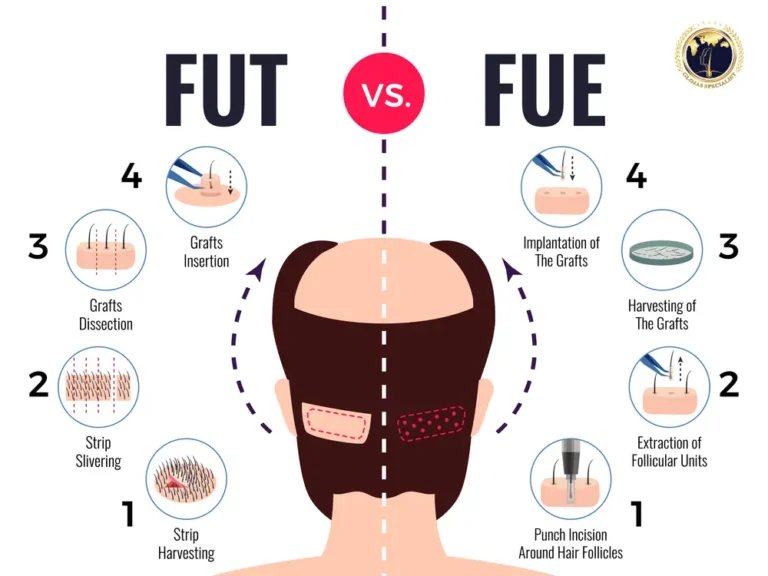
    FUT (Follicular Unit Transplantation)

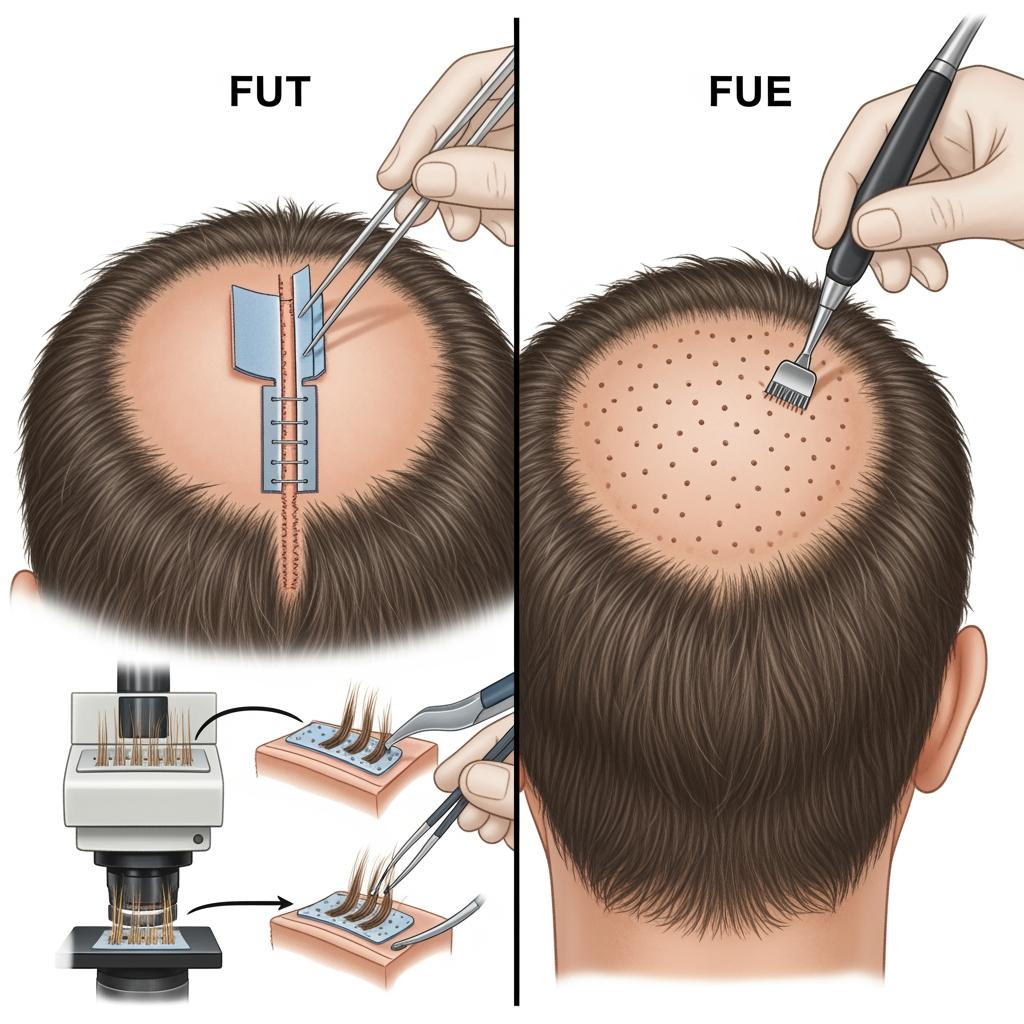
    Also known as the strip method, FUT involves removing a narrow strip of scalp from the donor area (usually the back of the head). Under a microscope, this strip is dissected into thousands of individual follicular units — each containing 1–4 hairs — that are then implanted into thinning or bald areas.

    FUE (Follicular Unit Extraction)

    FUE, by contrast, extracts each follicular unit individually using a micro-punch device. No strip of skin is removed; instead, the surgeon harvests follicles one by one and implants them in the recipient area.

    Both techniques transplant your own living hair follicles — ensuring natural, permanent results.


    The Key Difference Between FUT and FUE

    The Difference Between FUT and FUE Hair Transplant

    The main distinction lies in how the donor hair is harvested.

    FeatureFUTFUE
    Donor MethodThin strip of scalp removedIndividual follicles extracted
    ScarringOne fine linear scar (hidden under hair)Hundreds of micro-dot scars (barely visible)
    Healing Time10–14 days3–5 days
    Graft YieldHigher per session (up to 4,000)Moderate (1,500–3,000)
    AnesthesiaLocalLocal
    Post-Op DiscomfortSlight tightnessMild soreness only
    Ideal CandidateLarge bald areas needing high densityPatients wanting minimal scarring or short haircuts
    CostSlightly lower per graftSlightly higher per graft

    In essence:

    • FUT = Maximum grafts per session (ideal for advanced hair loss).
    • FUE = Maximum comfort & minimal scarring (ideal for active lifestyles).

    How Each Procedure Works

    1️⃣ FUT Procedure at AZ Scalp Doctor

    1. The donor area is numbed and a thin strip of scalp is removed.
    2. The incision is closed with fine sutures using trichophytic closure (for nearly invisible scars).
    3. Under a microscope, the strip is divided into thousands of follicular units.
    4. Each graft is inserted into the recipient area following natural hair direction.
    5. Recovery takes about 10–14 days; sutures are removed after a week.

    2️⃣ FUE Procedure at AZ Scalp Doctor

    1. The donor area is trimmed short and numbed.
    2. Using a micro-punch tool (0.8–1.0 mm), follicles are extracted individually.
    3. Each graft is implanted directly into the balding area.
    4. Tiny circular wounds heal naturally in a few days, leaving no linear scar.
    5. Recovery time is just 3–5 days with minimal downtime.

    FUT vs FUE: Advantages and Drawbacks

    Advantages of FUT

    • Can harvest more grafts in a single sitting.
    • Ideal for advanced hair loss cases.
    • Lower cost per graft.
    • Proven long-term results for decades.

    Drawbacks of FUT

    • Linear scar (though concealed under hair).
    • Slightly longer healing time.
    • Not ideal for very short hairstyles.

    Advantages of FUE

    • No stitches or visible scar.
    • Quick recovery — most patients return to work in 3–5 days.
    • Flexible for small areas (hairline, beard, eyebrows).
    • Great for patients who wear short hair.

    Drawbacks of FUE

    • Slightly higher cost per graft.
    • More time-intensive for the surgeon.
    • May require multiple sessions for extensive coverage.

    Results: What to Expect from Each Technique

    TimeframeFUT ResultsFUE Results
    2–3 WeeksMinor shedding (normal)Same phase (shock loss)
    3–6 MonthsNew hair growth visibleEarly growth begins
    9–12 MonthsFull density & coverageFinal texture & density achieved
    Long-TermPermanent, natural hairPermanent, natural hair

    At AZ Scalp Doctor, both methods achieve a 95%+ graft survival rate — thanks to precise handling and advanced implantation techniques.


    Cost Comparison in Arizona

    TechniqueTypical Cost RangeAverage Graft Price
    FUT$3,000 – $7,500$2.50 – $4 per graft
    FUE$4,000 – $9,000$3 – $6 per graft

    Prices depend on:

    • Number of grafts required
    • Technique complexity
    • Surgeon expertise
    • Use of hybrid FUT + FUE approaches

    AZ Scalp Doctor provides transparent, itemized estimates and flexible financing options to make treatment accessible.


    Who Should Choose FUT vs FUE?

    Choose FUT if you:

    • Have large bald areas or advanced hair loss.
    • Prefer maximum density in a single session.
    • Don’t plan to shave your head or wear short hairstyles.
    • Want a more cost-efficient transplant.

    Choose FUE if you:

    • Want minimal or invisible scarring.
    • Prefer faster recovery with no stitches.
    • Need small-area correction (beard, temple, eyebrows).
    • Value flexibility and modern technique.

    Combination (Hybrid) FUT + FUE Procedures

    At AZ Scalp Doctor, many patients benefit from a hybrid approach, combining FUT and FUE in one or multiple sessions.
    This method allows us to:

    • Maximize total graft yield, and
    • Maintain natural donor-area density.

    It’s particularly effective for patients with limited donor availability or previous surgeries.


    Recovery and Aftercare for Both FUT and FUE

    While each method has a different healing timeline, recovery principles are similar:

    First 48 Hours

    • Keep scalp dry and protected.
    • Avoid touching grafts or wearing tight headwear.
    • Sleep with head elevated.

    Days 3–10

    • Gentle washing using the clinic-approved shampoo.
    • Avoid exercise, direct sun, and heat.

    After 2 Weeks

    • Light activities resume.
    • FUT patients may have sutures removed.

    After 3 Months

    • New follicles enter growth phase.
    • Use clinic-recommended supplements and hair serum if advised.

    FUT vs FUE: Which Looks More Natural?

    When done correctly by a skilled surgeon, both FUT and FUE produce equally natural results.
    The artistry lies not in the technique itself, but in:

    • The angle and direction of implantation,
    • The density matching of grafts, and
    • The design of the hairline to fit facial features.

    At AZ Scalp Doctor, our surgical team custom-designs every hairline using digital simulation and patient feedback to ensure the results look natural and seamless.


    FUT and FUE Success Rate

    Our clinic’s graft survival rate exceeds 95%, regardless of technique.
    Key factors behind our success:

    • Microscopic dissection to preserve follicles
    • Gentle handling to prevent trauma
    • Optimal graft hydration
    • Advanced implantation angles for realistic density

    Frequently Asked Questions

    1️⃣ Is FUT more painful than FUE?
    Both are done under local anesthesia. FUT may cause mild tightness for a few days, while FUE has slightly faster comfort recovery.

    2️⃣ Can I choose which method I want?
    Yes. After evaluation, our surgeon will recommend the best method based on your hair-loss pattern and donor health.

    3️⃣ Will my results last forever?
    Yes — transplanted follicles are resistant to future hair loss.

    4️⃣ Can I do FUT now and FUE later?
    Absolutely. Many patients start with FUT and later refine hairlines with FUE.

    5️⃣ Is there a non-surgical alternative?
    PRP therapy or medical treatments like finasteride/minoxidil may slow loss but won’t restore density permanently.


    Why Choose AZ Scalp Doctor for FUT & FUE Hair Transplants

    • Board-Certified Hair-Restoration Specialist
    • Microscopic precision ensuring high graft survival
    • State-of-the-art technology in a safe, sterile facility
    • Natural results, personalized design, transparent cost
    • Serving Phoenix, Scottsdale, Mesa & beyond

    Book a Consultation Today

    If you’re still unsure which technique — FUT or FUE — fits your goals, schedule a consultation with AZ Scalp Doctor.
    Our specialists will analyze your scalp, explain every option, and design a treatment plan tailored just for you.

    📅 Book Online today.

  • Graft Hair Transplant – Understanding the Foundation of Natural Hair

    Introduction

    In modern hair restoration, one word determines success more than any other — Graft Hair Transplant. A graft is not just a strand of hair; it’s the living unit that defines the density, coverage, and naturalness of your new look.

    Understanding how grafts work — how they’re harvested, handled, and implanted — helps you appreciate why precision and medical expertise matter so much.

    At AZ Scalp Doctor, we believe every patient deserves more than just coverage; they deserve artistry backed by science. This article explains what a graft hair transplant really means, how graft quality affects results, and why every follicle counts.


    What Is a Hair Transplant Graft?

    A graft is a small skin tissue containing 1 to 4 hair follicles, extracted from a donor area (usually the back or sides of the scalp) and transplanted into thinning or bald zones. Each graft grows naturally in its new location, maintaining the same color, texture, and growth pattern as before.

    Every graft is biologically unique — it includes not only the follicle but also supporting structures such as sebaceous glands and dermal sheaths. These microscopic details are what ensure each implanted graft continues to grow naturally and permanently.


    Why Graft Quality Matters for Successful Hair Transplants

    In hair restoration, success isn’t defined by the number of grafts transplanted — it’s defined by how many survive.

    At AZ Scalp Doctor, we emphasize graft integrity through strict temperature control, hydration, and minimal handling. Every graft is treated as a living tissue that must remain viable during the transition from donor to recipient site.

    Key factors affecting graft quality

    1. Extraction precision – Prevents follicle transection or root damage.
    2. Storage medium – Hypothermic solutions maintain cell vitality.
    3. Implantation speed – Reduces “out-of-body” time.
    4. Team expertise – Consistent graft placement at correct angles and depth.

    A clinic that achieves a 90 – 95 % graft survival rate ensures thicker, long-lasting results with fewer sessions.


    FUE vs FUT – How the Graft Method Impacts Results

    The two main hair transplant techniques, FUE and FUT, both rely on grafts — but how they’re extracted makes all the difference.

    TechniqueMethodScarringRecoveryGraft Yield
    FUEIndividual follicles removed via micro-punchesTiny, dot-like3 – 7 daysModerate
    FUTStrip of scalp removed, dissected into graftsThin linear10 – 14 daysHigh
    • FUE (Follicular Unit Excision) is ideal for patients wanting minimal downtime and short hairstyles.
    • FUT (Follicular Unit Transplantation) allows larger graft numbers in one session but leaves a fine scar.

    At AZ Scalp Doctor, our surgeons combine these methods strategically for optimal graft yield, density, and natural growth direction.


    How Many Grafts Do You Need?

    How Many Graft Hair Transplant Do You Need

    Every head is different, but graft count largely depends on the area of baldness and desired density.

    Area of CoverageApproximate Grafts Needed
    Receding hairline1,500 – 2,000
    Crown thinning2,000 – 3,000
    Full top restoration4,000 – 5,000 +

    A surgeon evaluates your donor area to determine how many healthy grafts can be safely extracted. Over-harvesting can thin the donor site, so balance is crucial.

    AZ Scalp Doctor uses digital imaging and AI density mapping to estimate graft requirements precisely, ensuring natural density without depletion.


    Cost per Graft – What Determines the Price of Hair Transplantation

    Hair transplants are typically priced per graft, making transparency essential.

    Factors that influence cost

    • Technique used – FUE often costs slightly more than FUT due to manual precision.
    • Graft quantity – Larger sessions can reduce cost per graft.
    • Surgeon expertise – Certified specialists ensure better results and fewer revisions.
    • Technology & equipment – Advanced extraction tools minimize graft damage.

    At AZ Scalp Doctor, our pricing model is fully transparent. Patients receive a personalized quote based on graft count, technique, and expected density — no hidden fees, no unrealistic promises.


    The Science of Graft Survival

    A graft’s journey doesn’t end after implantation — in fact, it’s just beginning.

    1. Extraction Phase – Grafts are removed carefully to preserve root structure.
    2. Preservation Phase – Grafts rest in nutrient solutions to prevent dehydration.
    3. Implantation Phase – Each graft is placed at the right angle, depth, and direction.
    4. Healing & Growth Phase – Blood supply reconnects; hair begins new growth cycle.

    Transplanted grafts typically shed within 2 – 8 weeks — this is normal “shock loss.” New growth starts around month 3 – 4 and continues to mature up to month 12 – 18.

    At AZ Scalp Doctor, we enhance survival with Platelet-Rich Plasma (PRP) injections and cold-storage media, giving every graft the best possible start.


    Post-Transplant Care for Graft Protection

    Your aftercare routine directly affects graft survival.

    The First 2 Weeks

    • Avoid touching or scratching grafted areas.
    • Sleep with head elevated to minimize swelling.
    • Use only prescribed shampoo and saline sprays.

    After 1 Month

    • Gentle washing can resume.
    • Avoid direct sun, heat, and vigorous exercise.

    After 3 Months

    • Continue medications like minoxidil (if prescribed).
    • Attend follow-ups to assess new growth.

    Neglecting post-operative care can cause graft dislodgement, poor growth, or infection. That’s why our specialists provide personalized recovery kits and check-in calls after every surgery.

    Read Our Complete Aftercare Guide


    Common Myths About Grafts in Hair Transplants

    Myth 1: All grafts survive after surgery.
    ➡ False. Even in the best conditions, a small percentage may not survive.

    Myth 2: More grafts mean better results.
    ➡ Not necessarily. Over-packing can limit blood supply, reducing survival.

    Myth 3: Transplanted grafts never shed.
    ➡ Temporary shedding is expected; new permanent growth follows.

    Myth 4: Grafts can be reused or moved again later.
    ➡ Once implanted, grafts integrate permanently into their new site.

    By understanding these myths, patients set realistic expectations and trust the process.

    Visit Our FAQ on Hair Transplant Recovery


    Why Choose AZ Scalp Doctor for Your Graft Hair Transplant

    Choosing the right clinic determines whether your hair transplant becomes a masterpiece or a disappointment.

    At AZ Scalp Doctor, we stand out through:

    • Licensed surgeons with decades of microsurgical experience.
    • Advanced equipment ensuring minimal trauma and maximum survival.
    • Customized graft planning tailored to facial shape and donor availability.
    • Sterile, ISO-certified operating rooms meeting global safety standards.
    • Transparent communication — no inflated graft counts or unrealistic claims.

    Our philosophy is simple: every graft deserves expert care. That’s how we deliver natural, lifelong transformations.


    Frequently Asked Questions

    1. How long do transplanted grafts last?
    Transplanted grafts are genetically resistant to balding and typically last a lifetime.

    2. Is there a limit to the number of grafts per session?
    Yes. Most patients can safely receive up to 3 500 – 4 000 grafts per day, depending on donor density and technique.

    3. Do grafts start growing immediately?
    Initial shedding occurs within weeks, with new growth starting around month 3.

    4. Can I combine PRP with my graft transplant?
    Yes — PRP improves graft survival, speeds healing, and enhances hair thickness.

    5. What happens if some grafts fail?
    Minor graft loss is normal. After 12 months, touch-up procedures can refine density.


    Conclusion

    A graft hair transplant is far more than a cosmetic treatment — it’s a precision medical procedure that demands expertise, technology, and meticulous care.

    When every graft is respected as a living unit, the results speak for themselves: thicker, natural-looking hair that lasts for decades.

    At AZ Scalp Doctor, we combine artistry with medical science to restore not just your hair, but your confidence and identity.

    Ready to start your transformation?
    Schedule Your Free Consultation Today

  • Why Is It Important to Have a Hepatitis Test before a Hair Transplant?

    Understanding the Hidden Risks, Safety Standards, and Ethical Responsibility in Modern Hair Transplant

    Before undergoing a hair transplant, most patients focus on the aesthetic outcome — how full their hair will look or which technique (FUE or FUT) is better. However, one vital step often overlooked is medical screening, particularly Hepatitis B and C testing.

    Why Hepatitis Testing Is Essential before a Hair Transplant

    At AZ Scalp Doctor, patient safety is the highest priority. Routine pre-surgery testing helps protect both the patient and the medical team, ensuring that procedures are carried out safely and ethically.

    This article explains why hepatitis testing is essential before any surgical hair restoration, and how it contributes to long-term health and successful results.


    Understanding Hepatitis and Its Transmission

    Hepatitis refers to inflammation of the liver, usually caused by viral infections.
    The two most concerning types in surgical settings are Hepatitis B (HBV) and Hepatitis C (HCV) — both can spread through blood-to-blood contact.

    Common Transmission Routes

    • Use of contaminated instruments
    • Shared needles or sharp tools
    • Blood transfusions (in rare, unscreened cases)
    • Direct exposure to infected body fluids

    Even though modern clinics maintain strict sterilization, unrecognized infections still pose a risk. That’s why professional hair-transplant centers require pre-operative screening for all patients.


    Why Hepatitis Testing Is Mandatory before Hair Transplant

    1. Protecting Patient Safety

    A hair transplant involves micro-incisions and contact with blood.
    If a patient unknowingly carries Hepatitis B or C, surgical stress and anesthesia can further affect liver function. Early detection allows physicians to:

    • Adjust medication or anesthesia protocols
    • Delay surgery until viral load is controlled
    • Prevent potential post-operative complications

    2. Ensuring Medical Team Safety

    Healthcare professionals are also at risk of accidental exposure. Testing minimizes that risk by enabling the clinic to take enhanced infection-control measures, such as double-gloving, disposable instruments, and dedicated treatment zones.

    It’s not just about the patient — it’s about maintaining a safe medical environment for everyone involved.


    3. Upholding Sterilization and Ethical Standards

    International medical boards and associations — including the ISHRS and WHO — emphasize pre-operative blood screening as a non-negotiable standard.

    A clinic that follows this rule demonstrates professionalism, transparency, and genuine care for its patients.

    See Our Safety & Sterilization Protocols


    4. Avoiding Cross-Contamination

    Unscreened hepatitis carriers could inadvertently cause cross-contamination if instruments or surgical tools aren’t managed properly. Even with advanced autoclaves, pre-testing remains the first line of defense.

    At AZ Scalp Doctor, each patient’s test result determines the specific sterilization cycle and setup used — ensuring zero compromise on hygiene.


    5. Legal and Regulatory Compliance

    In many countries, including the U.S. and EU, Hepatitis and HIV testing before elective surgery is legally required.
    Compliance protects both the clinic and the patient from malpractice risks, insurance denial, and legal disputes should a post-operative infection occur.


    What Tests Are Typically Required?

    A standard pre-transplant laboratory panel includes:

    • Hepatitis B Surface Antigen (HBsAg)
    • Hepatitis C Antibody (Anti-HCV)
    • HIV I/II screening
    • Complete Blood Count (CBC)
    • Liver and kidney function tests

    Patients who test positive aren’t automatically disqualified — instead, the procedure is postponed or modified until medical clearance is obtained.

    Explore Our Pre-Surgery Checklist


    How AZ Scalp Doctor Ensures Safety

    At AZ Scalp Doctor, every patient undergoes a confidential pre-operative screening before scheduling surgery.

    • All tests are handled in certified laboratories.
    • Results are reviewed by a licensed physician.
    • Each surgical kit is 100 % single-use and sterilized.
    • The operating room follows ISO-grade infection-control protocols.

    These measures guarantee not only the patient’s safety but also uphold our ethical commitment to the highest clinical standards.


    What If You Test Positive for Hepatitis?

    Testing positive doesn’t mean you can never have a hair transplant.
    It simply means additional precautions are necessary:

    1. Consult a hepatologist to manage viral load and liver health.
    2. Delay surgery until viral activity is controlled.
    3. Continue regular monitoring to maintain stability.

    Once your physician approves, a hair transplant can proceed safely with special sterilization measures and dedicated surgical equipment.


    Ethical Responsibility in Cosmetic Surgery

    A reputable clinic doesn’t just deliver cosmetic results — it safeguards human health.
    Testing for Hepatitis B and C is a small step that prevents lifelong complications. Choosing a clinic that enforces strict pre-surgery screening reflects its commitment to ethics, transparency, and medical integrity.

    Why Choose AZ Scalp Doctor


    Conclusion

    Undergoing a Hepatitis test before a hair transplant isn’t just a formality — it’s a vital safety measure. It protects your health, ensures the safety of medical staff, and reinforces the professionalism of your clinic.

    At AZ Scalp Doctor, we believe great hair restoration starts with great health. By prioritizing comprehensive pre-operative testing, we make sure every transformation is safe, ethical, and life-changing.

    Schedule Your Pre-Surgery Consultation Today

  • Do Hair Transplants Really Work?

    A Definitive Guide to Success, Longevity, and Results

    Introduction

    Hair loss can affect self-confidence, professional image, and overall well-being. As more people seek long-term solutions, hair transplants remain one of the most effective medical procedures available today. But many still ask: do hair transplants really work?

    The short answer is yes. When performed by a skilled and certified specialist, hair transplants provide natural-looking, permanent results that last for decades. In this guide, we’ll uncover everything you need to know — from how the procedure works to recovery, longevity, and real-world success rates — based on the clinical experience of AZ Scalp Doctor specialists.


    How Hair Transplants Work

    Do Hair Transplants Really Work? Definitive Guide to Success

    Hair transplant surgery involves moving healthy, DHT-resistant follicles from the back or sides of the scalp (the donor area) to areas affected by baldness (the recipient zone). These transplanted follicles are genetically programmed to continue growing permanently.

    There are two leading techniques:

    1. Follicular Unit Transplantation (FUT)

    • A thin strip of scalp is removed from the donor area and divided into grafts.
    • Allows for large graft numbers per session, making it ideal for extensive hair loss.
    • May leave a fine linear scar hidden by surrounding hair.

    2. Follicular Unit Excision (FUE)

    • Individual follicles are extracted using micro-punch tools.
    • Minimal scarring and faster recovery, perfect for patients who prefer short hairstyles.
    • Slightly lower graft yield per session but improving with modern robotics and precision tools.

    Learn more about our FUE vs FUT Techniques


    Do Hair Transplants Really Work?

    Absolutely. Modern transplant methods deliver up to 90–95 % graft survival when performed under sterile conditions by licensed specialists. Studies and patient follow-ups confirm that transplanted follicles retain their natural resistance to hair loss hormones (DHT) and continue to grow permanently.

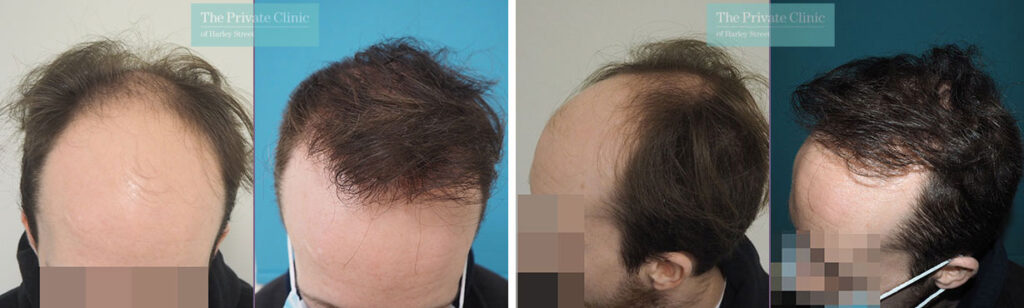
    Most patients see visible results between 3 and 6 months, with full density appearing around 12 months. However, results vary depending on scalp condition, lifestyle, and adherence to aftercare guidelines.


    Comparing FUE vs FUT

    CriteriaFUEFUT
    ScarringTiny dot scars (virtually invisible)Thin linear scar (easily hidden)
    Recovery Time3–7 days10–14 days
    Pain/DiscomfortMinimalMild tension possible
    Graft QuantityModerate (ideal for small / medium areas)High (best for extensive cases)
    Recommended ForShort hairstyles, quick recoveryLarge-scale restoration

    Both techniques deliver outstanding outcomes when matched correctly to the patient’s hair type, pattern, and goals.


    What to Expect After Surgery

    1–2 Weeks: mild redness, swelling, and scabbing around grafts. Healing occurs quickly with proper care.
    2–8 Weeks: temporary shedding phase — transplanted hairs fall out before new growth begins.
    3–4 Months: first signs of regrowth appear; thin, soft hairs start emerging.
    6–9 Months: noticeable thickening and volume increase.
    10–18 Months: final, mature results with natural density and direction.

    Read our Post-Transplant Aftercare Guide


    Longevity & Maintenance

    Transplanted follicles are permanent. They continue to grow just like natural hair for a lifetime. However, non-transplanted hair may still thin with age. To maintain the best overall look, experts at AZ Scalp Doctor recommend:

    • Medications: Minoxidil or Finasteride (under supervision)
    • PRP Therapy: Platelet-rich plasma to boost graft survival
    • Healthy lifestyle: Nutrition, exercise, and scalp hygiene

    Who Is the Ideal Candidate?

    You’re a good candidate for hair transplant surgery if you:

    • Have stable pattern hair loss
    • Possess sufficient donor-area density
    • Maintain overall good health
    • Understand the gradual nature of results

    Those with advanced diffuse thinning or ongoing medical hair loss should stabilize first with professional treatment plans.

    Book a Consultation with AZ Scalp Doctor


    Enhancing Results with Combination Therapy

    Modern clinics now combine surgical and non-surgical methods for optimal outcomes.

    • Finasteride / Minoxidil: Protect existing hair from future thinning.
    • PRP: Strengthens newly transplanted follicles.
    • Low-Level Laser Therapy (LLLT): Increases blood flow and recovery speed.

    Integrating these methods ensures both transplanted and native hair remain dense and healthy.


    Potential Risks & How to Avoid Them

    When performed by certified surgeons, complications are rare. Still, patients should be aware of:

    • Temporary numbness or swelling
    • Mild infection risk
    • Graft failure from poor post-op care
    • Unnatural hairline design if done by inexperienced technicians

    AZ Scalp Doctor guarantees that all procedures are performed by licensed medical professionals following the highest international standards.


    Hair Transplant Industry Insights

    The global hair restoration market has surged over 60 % since 2020, driven by breakthroughs in FUE robotics and minimally invasive methods. FUE now represents over 70 % of all procedures worldwide.

    This rapid growth confirms one thing — hair transplants truly work, and modern innovations continue to make them more effective, accessible, and natural than ever.


    The Definitive Step-by-Step Journey

    Before the Procedure

    1. Scalp examination and donor analysis
    2. Hairline design based on facial proportions
    3. Medical history review and blood screening

    Day of Surgery

    • Local anesthesia administered
    • Graft extraction and implantation
    • Post-operative dressing applied

    Aftercare Timeline

    • Avoid scratching or washing aggressively for 10 days
    • Resume light activities after 3 days
    • Expect shedding by week 3 – 4
    • Begin new growth between 3 – 6 months

    Conclusion

    So — do hair transplants really work?
    Yes, and they remain the gold-standard solution for permanent hair restoration. When performed by experts, the transplanted hair grows naturally, matches existing texture, and lasts a lifetime.

    For anyone struggling with hair loss, this procedure doesn’t just restore hair — it restores confidence, personality, and self-esteem.

    Schedule Your Free Assessment Today

    Our Location : Az Scalp Doctor Arizona

  • Scalp Micropigmentation Scar Camouflage Concealing Scars Naturally

    Visible scalp scars — whether from a hair transplant, accident, or surgery — can leave more than just a mark on your skin. They often leave a mark on your confidence too. Many people struggle to hide these scars with hairstyles, concealers, or hats, only to feel frustrated when nothing truly works. That’s where Scalp Micropigmentation Scar Camouflage (SMP-SC) comes in. This innovative, non-surgical procedure uses micro-dots of pigment to blend scars seamlessly with your natural scalp tone, creating the appearance of real hair follicles.

    Scalp Micropigmentation Scar Camouflage Expert SMP Solution

    At AzScalpDoctor, we specialize in restoring confidence by transforming visible scars into invisible stories. This complete guide explains how scalp micropigmentation scar camouflage works, who it’s for, how much it costs, and what to expect before and after treatment.


    What Is Scalp Micropigmentation Scar Camouflage?

    Scalp Micropigmentation Scar Camouflage (SMP-SC) is a cosmetic treatment that conceals scalp scars using natural-looking pigment deposits. The process replicates the look of tiny hair follicles to make scars virtually disappear, even under close inspection.

    Unlike tattooing, SMP uses specialized pigments formulated to stay true in color and mimic natural follicle texture. It’s safe for all skin tones, and it can be used on shaved heads, thinning hair, or areas where scarring disrupted natural growth.

    How it differs from regular SMP:
    While traditional scalp micropigmentation targets baldness or density enhancement, scar camouflage specifically focuses on covering scar tissue — an area with unique texture and color. Special care is required because scar skin absorbs pigment differently from normal scalp skin.

    SMP scar camouflage is ideal for:

    • Hair transplant scars (FUT or FUE)
    • Injury or burn scars
    • Surgical incision marks
    • Alopecia-related scarring

    Types of Scars Treatable with Scalp Micropigmentation

    Different scars respond differently to SMP. Understanding the scar type helps determine the technique and pigment approach used by your specialist.

    1. FUT (Strip) Hair Transplant Scars

    Follicular Unit Transplantation (FUT) often leaves a long, horizontal scar at the back of the head where a strip of skin was removed. SMP fills the scar with micro-dots that replicate hair follicles, visually breaking up the white line and blending it with the surrounding scalp.

    2. FUE (Dot) Hair Transplant Scars

    Follicular Unit Extraction (FUE) leaves multiple small circular scars across the donor area. Though less noticeable than FUT, they can still create visible contrast on short haircuts. SMP reduces that contrast, creating a smooth, uniform tone.

    3. Trauma or Surgical Scars

    Accidents, burns, or scalp surgeries can leave irregularly shaped scars. SMP’s micro-layering technique helps disguise discoloration and restores a more even, natural look.

    4. Alopecia and Medical Scarring

    People with alopecia or skin conditions may have patchy pigmentation or uneven scalp texture. SMP evens out those variations, reducing visible contrast and improving overall scalp appearance.

    Pro tip: Always consult a certified SMP technician experienced with scar tissue. Scarred skin absorbs pigment differently, requiring careful adjustment in depth and density.


    How Scalp Micropigmentation Scar Camouflage Works

    The SMP process is highly precise, requiring both technical skill and artistry. Each treatment plan is customized based on scar type, scalp tone, and desired density.

    Step 1 – Consultation and Assessment

    Every treatment begins with a detailed consultation. The technician examines your scar’s color, size, and depth to determine the right approach. At AzScalpDoctor, we create a digital preview to simulate what your results will look like after healing.

    Step 2 – Pigment Selection and Patch Testing

    A custom pigment blend is mixed to match your natural hair follicle color and skin undertone. A patch test ensures that the pigment is safe and stable on your skin before the full procedure begins.

    Step 3 – Micropigmentation Process

    Using a micro-needle, the technician deposits pigment dots just below the skin’s surface. Each micro-dot replicates a natural follicle.
    In scar camouflage, the goal is to break up the lighter color of the scar and blend it with surrounding tissue. Multiple layers are applied in sessions to create a gradual, realistic effect.

    Step 4 – Healing and Refinement Sessions

    Scar tissue often requires 2–3 sessions spaced over several weeks. Each visit builds density and refines tone for a perfect match.
    After each session, you’ll receive specific aftercare instructions to ensure optimal healing and pigment retention.


    Benefits of Scalp Micropigmentation Scar Camouflage

    1. Instantly Reduces Scar Visibility

    SMP pigments disguise scars almost immediately, creating a uniform tone that makes them nearly impossible to detect.

    2. Non-Surgical and Safe

    There are no incisions, stitches, or anesthesia. Recovery is minimal, with most clients resuming normal activities within 24–48 hours.

    3. Natural and Long-Lasting Results

    When performed by professionals, SMP lasts between 3–5 years. It fades gradually and naturally, maintaining realistic results over time.

    4. Suitable for All Skin and Hair Types

    From light to dark complexions, SMP pigment shades can be customized for every individual. It’s equally effective for men and women.

    5. Confidence Restored

    Many clients report immediate emotional improvement. They can finally wear short hairstyles or go swimming without worrying about visible scars.

    “After SMP, my transplant scar completely vanished. I finally feel confident with a short fade again.” – David, AzScalpDoctor Client


    Why Choose SMP Over Other Scar Treatments

    TreatmentInvasivenessDowntimeRisk LevelResult Longevity
    SMP Scar CamouflageNon-surgical1–3 daysLow3–5 years
    Laser ResurfacingModerate1–2 weeksMediumVariable
    Scar Revision SurgerySurgical2–4 weeksHighPermanent but risky
    Makeup/ConcealerNon-surgicalNoneNoneDaily re-application

    SMP offers the best balance between effectiveness, safety, and cost. It achieves what creams and lasers can’t — instant visual camouflage that looks like natural hair follicles.


    Cost of Scalp Micropigmentation Scar Camouflage

    The cost depends on several factors:

    • Size and location of the scar
    • Number of sessions required
    • Technician’s expertise

    On average, scar camouflage ranges between $300 and $1,000 per session. Most clients need 2–3 sessions for complete blending.

    While cheaper clinics exist, they often use low-quality pigments or inexperienced artists — leading to fading or discoloration.
    AzScalpDoctor offers transparent pricing, free consultations, and pigment quality guaranteed to stay true in color.


    Aftercare and Healing Tips

    Proper aftercare determines how well your SMP heals and how long the results last.

    Immediate Aftercare (First 5 Days)

    • Avoid sweating, swimming, and hot showers.
    • Do not touch, scratch, or wash the area.
    • Sleep on a clean pillowcase to prevent irritation.

    Mid-Healing (Day 6–10)

    • Wash gently with antibacterial soap and lukewarm water.
    • Apply a light moisturizer to avoid dryness and flaking.
    • Let scabs fall off naturally — never pick them.

    Long-Term Maintenance

    • Use sunscreen (SPF 50+) when outdoors to prevent pigment fading.
    • Moisturize daily to keep scalp skin healthy.
    • Schedule touch-ups every 2–3 years to maintain pigment intensity.

    Scalp Micropigmentation Aftercare Tips


    Real-Life Results: Before and After SMP Scar Camouflage

    Visual results are often stunning. Once healed, scars blend seamlessly with surrounding hair follicles.

    At AzScalpDoctor, before-and-after photos consistently show 90–100% reduction in scar visibility.
    Clients who once felt forced to hide scars with hats or hairpieces often leave the clinic smiling — finally free to wear any hairstyle they like.

    “I had an old FUT transplant scar that bothered me for years. After two sessions, I couldn’t even find it in the mirror.” – James, 42


    Is Scalp Micropigmentation Scar Camouflage Right for You?

    Ideal Candidates

    • Hair transplant patients with visible scars
    • Individuals with scalp injuries or surgical scars
    • Clients with alopecia-related scarring
    • People with stable, healed scar tissue

    Who Should Avoid SMP

    • Those with open wounds, infections, or active psoriasis
    • People allergic to pigment ingredients (unless patch-tested)
    • Patients on medications that affect healing or pigmentation

    Contact Us for Free Consultation


    Why Choose AzScalpDoctor for SMP Scar Camouflage

    At AzScalpDoctor, we are more than practitioners — we are restoration artists dedicated to precision, safety, and aesthetics.

    1. Certified SMP Specialists

    Our practitioners are certified in advanced scar camouflage and skin-tone matching.

    2. Medical-Grade Pigments and Equipment

    We use top-tier pigments that remain color-true and safe for all skin types.

    3. Customized Color Blending

    Every pigment mix is designed to match your natural follicle shade and skin undertone perfectly.

    4. Private, Confidential Consultations

    We understand the sensitivity around scars and hair loss. All consultations are confidential and supportive.

    5. Proven Track Record

    Hundreds of satisfied clients and before-and-after results validate our expertise.

    Call to Action:

    “Book your free SMP scar consultation today and take the first step toward regaining your confidence — permanently.”

  • Scalp Micropigmentation Regrets – 6 thing you need to Know!

    Scalp Micropigmentation (SMP) has become a popular solution for men and women struggling with baldness or thinning hair. It offers fast, realistic results that simulate a freshly shaved scalp or denser hairline. Yet behind countless success stories, there’s a smaller but important group of patients who experience scalp micropigmentation regrets — dissatisfaction or disappointment after the procedure.

    6 Scalp Micropigmentation Regrets & How to Avoid Them

    This article dives deep into why people regret SMP, what common mistakes lead to those outcomes, and how to avoid them so your investment truly boosts your confidence — not your frustration.


    What Is Scalp Micropigmentation (SMP)?

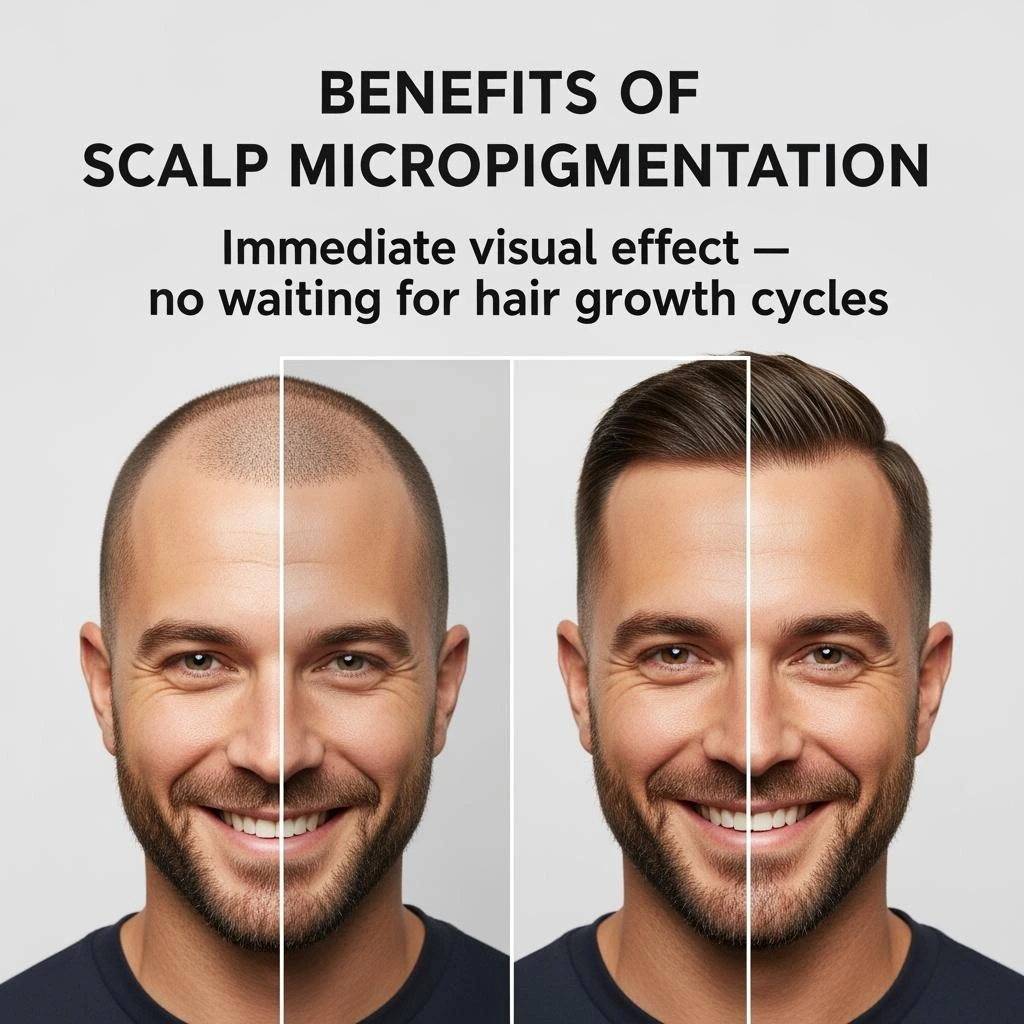
    Scalp Micropigmentation is a non-surgical cosmetic procedure that mimics the appearance of hair follicles by implanting micro-dots of pigment into the scalp. The result creates an illusion of density or a clean buzz-cut look, depending on your hair loss pattern.

    Unlike a hair transplant, SMP doesn’t restore real hair growth — it simply creates the illusion of thicker hair. The treatment usually takes two to three sessions and can last up to five years with proper aftercare.

    However, the quality of the result depends heavily on three key factors: technique, pigment choice, and design precision. When these elements fail, disappointment follows — and that’s where most regrets begin.


    Why Do People Regret Scalp Micropigmentation?

    While SMP can be life-changing, not every experience is perfect. Below are the most common reasons some people end up regretting their scalp micropigmentation procedure.


    1. Poor Technique and Inexperienced Technician

    The most frequent cause of SMP failure is poor execution. When a technician lacks skill or experience, the dots may be too large, unevenly spaced, or too deeply implanted. This can lead to discoloration or a “tattooed” appearance instead of natural hair follicles.

    Many clients fall for cheap clinics without verifying the artist’s background. But SMP is equal parts art and science — every stroke and depth matters.

    Tip: Always ask to see healed results, not just freshly done photos. The true test of quality appears after 2–4 weeks.


    2. Wrong Pigment Color or Fading Issues

    One of the biggest sources of scalp micropigmentation regrets comes from choosing the wrong pigment. Too dark, and it looks like a painted cap. Too light, and it fades unevenly. Worse, using tattoo ink instead of SMP-specific pigment can cause color shifts — often turning blue or green after exposure to UV light.

    Professional clinics use carbon-based or organic pigments designed to fade naturally. If your provider can’t explain what pigments they use, that’s a major red flag.


    3. Unnatural Hairline Design

    Your hairline defines your face. If it’s too straight, too low, or doesn’t match your age and bone structure, the entire result will look fake.

    A skilled SMP artist designs hairlines that complement your features and mimic realistic recession patterns. Unfortunately, many low-cost operators use cookie-cutter templates that make clients look unnatural or “painted on.”

    Restore Your Look with Scalp Micropigmentation Experts


    4. Unrealistic Expectations

    Another common cause of regret comes from expecting miracles. SMP doesn’t regrow hair — it creates an optical illusion of density. Clients who expect a full head of hair afterward often feel disappointed once they realize it’s a visual solution, not a biological one.

    Clear education before treatment prevents this problem. A well-informed client rarely regrets SMP.


    5. Poor Aftercare and Healing Problems

    Even the best SMP can fail if the client ignores aftercare instructions. Sun exposure, scratching, or washing the scalp too early can cause scabbing and pigment loss.

    Studies and clinic data show that nearly one-third of SMP failures are due to poor aftercare, not technician error.
    Every reputable clinic provides a detailed healing guide — and following it precisely is essential for long-term satisfaction.

    Scalp Micropigmentation Aftercare Tips | AzScalpDoctor


    6. Ongoing Hair Loss Over Time

    Hair loss doesn’t stop after SMP. For clients who continue to lose hair, untreated areas may become exposed, making the original SMP look patchy or unbalanced.

    Professional artists anticipate this by designing a “future-proof” hairline that still looks natural even if balding continues. Short-term design choices often lead to long-term regrets.


    Real Stories of Scalp Micropigmentation Regrets

    It’s easy to find real experiences shared online. On Reddit, one user in r/SMPchat wrote:

    “I loved it at first. But after two years, the pigment faded unevenly and looked patchy. I wish I had chosen a more experienced artist.”

    Another wrote:

    “It looks good indoors, but in natural sunlight, the dots appear bluish. I regret not doing more research beforehand.”

    These cases remind us that SMP regrets usually come from poor technique or rushed decisions, not the procedure itself.


    How to Avoid Scalp Micropigmentation Regrets

    The good news: most SMP regrets are preventable. Follow these professional guidelines from AzScalpDoctor to ensure your treatment becomes a success story, not a cautionary tale.


    1. Research Your Technician’s Credentials and Portfolio

    Always verify your artist’s certification, years of experience, and portfolio of healed results.
    Look for consistent, natural finishes under different lighting conditions. Ask for client testimonials, not just promotional images.

    A reputable SMP artist will be transparent about their process, pigments, and maintenance expectations.


    2. Ask the Right Pre-Treatment Questions

    Before committing, ask:

    • What type of pigment do you use?
    • How long will the results last before a touch-up?
    • Do you offer corrections or guarantees if I’m unsatisfied?

    These questions separate professional clinics from risky operators.


    3. Demand a Customized Hairline Consultation

    Avoid cookie-cutter hairlines. Request a personalized hairline design based on your facial shape, age, and hair pattern.
    Many premium clinics use digital simulations to preview potential outcomes.

    Pro tip: A slightly receded, soft-edge hairline looks far more natural than a straight, sharp line.


    4. Ask to See Healed Photos

    Fresh SMP work looks darker and sharper than the healed result. Pigment fades 20–30% during healing, so the final look is always softer. Make sure you review photos taken one month post-treatment to judge the artist’s true skill.


    5. Avoid Cheap Clinics

    Low-cost clinics often cut corners — using tattoo ink, unsterile needles, or untrained staff.
    Correction or removal of bad SMP can cost two to three times more than a proper procedure.

    Think of it this way: cheap work is expensive in the end.


    What to Do If You Already Regret Your SMP

    If you’re unhappy with your result, don’t panic. Most cases of scalp micropigmentation regrets can be corrected by experienced specialists.


    1. SMP Correction or Touch-Up

    If your SMP is too dark or uneven, an expert can fix it with color dilution, blending, or re-pigmentation techniques.
    This often takes one or two sessions and can dramatically improve the look without full removal.


    2. SMP Removal (Laser or Saline Method)

    For severe cases, pigment can be removed using either Q-switched laser or saline removal.
    Laser breaks pigment particles for the body to absorb naturally, while saline draws pigment out through the skin’s surface.

    Each method has pros and cons depending on pigment type and depth. A consultation will determine the safest choice for you.


    3. Camouflage and Blending Techniques

    If only part of the scalp looks unnatural, blending techniques can soften and balance the color gradient.
    This approach works well for uneven shading, dark spots, or harsh hairlines — offering a subtle fix instead of complete redo.


    4. Consult a Professional SMP Clinic

    Never try to fix bad SMP at home. Always consult an expert SMP practitioner for evaluation.
    At AzScalpDoctor, we offer free assessments to determine whether your case needs correction, removal, or simple touch-up.

    “Not every failed SMP requires removal. Many can be transformed with professional blending and pigment balancing.”
    — Dr. Francisco Ahumada, SMP Specialist, AzScalpDoctor


    Long-Term SMP Maintenance: The Key to Staying Regret-Free

    SMP isn’t a one-time fix. Pigments fade naturally over years due to skin renewal and sun exposure.
    Proper maintenance ensures your SMP continues to look clean and realistic.

    Essential Maintenance Tips

    • Protect your scalp from UV rays — use sunscreen SPF 50 or a hat outdoors.
    • Moisturize daily with alcohol-free lotion to prevent dryness.
    • Schedule touch-ups every 2–3 years to refresh pigment brightness.

    The better your aftercare and maintenance, the longer you’ll stay happy with your SMP.


    Alternatives to SMP for Hair Loss

    Still unsure about committing to SMP? Here’s a quick comparison of hair restoration options:

    MethodProsCons
    Hair TransplantReal hair growthExpensive, surgical risks
    Hair System (custom wig)Instant resultsHigh maintenance, limited lifespan
    Medication (Minoxidil, Finasteride)Stimulates natural growthHormonal side effects
    SMP (Scalp Micropigmentation)Immediate visual density, low maintenanceDoesn’t regrow hair

    SMP remains the most practical and cost-efficient solution for men and women who want an instant, natural look — when done by the right hands.


    Conclusion

    Scalp Micropigmentation is an incredible innovation that can transform appearance and confidence. But like any aesthetic procedure, results depend entirely on skill, preparation, and realistic expectations.

    Most cases of scalp micropigmentation regrets could have been avoided with better research, communication, and technician choice.

    By trusting a certified specialist like AzScalpDoctor, you can ensure professional pigment quality, proper hairline design, and a natural, fade-resistant result.

    AzscalpDoctor Location in Arizona

    “A great SMP doesn’t just change how you look — it changes how you feel about yourself.”


    FAQs About Scalp Micropigmentation Regrets

    1. Can scalp micropigmentation be removed?

    Yes. Both laser and saline removal methods can safely lighten or erase unwanted pigment.

    2. How much does SMP correction cost?

    Correction typically costs between $300–$800 per session, depending on the area and severity.

    3. Does SMP fade over time?

    Yes, pigment naturally fades within 3–5 years. Regular touch-ups help maintain color consistency.

    4. What if I don’t like my hairline?

    You can have your hairline reshaped or blended by a skilled SMP technician.

    5. Does everyone regret SMP eventually?

    Not at all. Most clients are highly satisfied, especially when they choose an experienced practitioner and follow aftercare like Azscalpdoctor.

    6. Is SMP suitable for women?

    Yes. SMP can effectively camouflage thinning hair in the crown or part line for women as well.

    7. How can I avoid bad SMP results?

    Choose a certified clinic, check healed results, and follow aftercare precisely. Never rush your decision.

  • What Is FUT Hair Transplant? | AZ Scalp Doctor Arizona

    FUT Hair Transplant: The Proven Strip Method for Permanent Hair Restoration

    What Is FUT Hair Transplant? | AZ Scalp Doctor Arizona

    If you’ve been researching hair restoration, you’ve probably seen the term FUT Hair Transplant or heard people ask, “What is FUT?”

    FUT stands for Follicular Unit Transplantation — one of the most reliable and widely used hair-transplant techniques in modern medicine. At AZ Scalp Doctor, Arizona’s trusted hair-restoration clinic, we specialize in FUT for patients who need high-density coverage and lasting results.

    In this guide, we’ll explain everything about what FUT is, how it works, the benefits, recovery timeline, cost, and how it compares to other methods such as FUE Hair Transplant.

    What Is Scalp Micropigmentation by AzScalpDoctor


    What Is FUT Hair Transplant?

    The FUT technique, often called the strip method, involves removing a narrow strip of skin from the back of the scalp (the donor area). This strip is then carefully dissected under a microscope to isolate individual follicular units — tiny, naturally occurring hair groups of one to four hairs.

    These grafts are then implanted into areas experiencing hair thinning or baldness, typically at the frontal hairline or crown.

    Unlike older “plug” techniques, FUT Hair Transplant produces smooth, natural hairlines and uniform growth patterns. The donor area heals with a fine linear scar that’s easily concealed beneath surrounding hair.

    “FUT remains one of the most effective and scientifically validated hair-transplant methods for patients seeking high density and long-term coverage.” — AZ Scalp Doctor Team


    How FUT Hair Transplant Works Step-by-Step

    Every FUT procedure at AZ Scalp Doctor follows a meticulous, patient-centered protocol to ensure the highest graft survival and natural aesthetics.

    Step 1 – Personalized Consultation

    • A comprehensive scalp evaluation identifies the extent of hair loss, donor density, and scalp flexibility.
    • We design a customized treatment plan, including graft count and target areas.

    Step 2 – Donor Strip Extraction

    • Under local anesthesia, a thin strip (1–1.5 cm wide) is removed from the donor area.
    • The incision is closed with advanced suturing for minimal scarring.

    Step 3 – Microscopic Graft Dissection

    • Our technicians use high-power microscopes to separate follicular units without damaging roots.
    • This ensures grafts remain intact and viable for re-implantation.

    Step 4 – Recipient-Site Creation and Implantation

    • Tiny incisions are made following the natural direction of your hair.
    • Each graft is inserted precisely for even density and natural alignment.

    Step 5 – Recovery and Growth

    • Most patients resume non-strenuous activities within a few days.
    • Full results develop gradually, with noticeable density after 9–12 months.

    Benefits of FUT Hair Transplant

    1. High Graft Yield: FUT can harvest thousands of grafts in a single session — ideal for extensive hair loss.
    2. Cost-Effective: Per-graft pricing is generally lower than FUE, making it budget-friendly for large areas.
    3. Excellent Survival Rate: Grafts dissected under magnification have high success rates.
    4. Permanent & Natural: Results blend seamlessly with your existing hair.
    5. Proven & Trusted: FUT has been a medical standard for over two decades.

    At AZ Scalp Doctor, we combine advanced closure techniques with artistry to ensure your FUT results look effortless.


    FUT vs FUE: Key Differences

    FeatureFUT (Follicular Unit Transplantation)FUE (Follicular Unit Extraction)
    Donor MethodThin strip of scalpIndividual follicles
    ScarringLinear (hidden under hair)Micro-dot
    Healing10–14 days3–5 days
    Graft VolumeHigher per sessionModerate
    CostLower per graftSlightly higher
    Ideal ForLarge hair-loss areasSmall or moderate cases

    If you’re unsure which option suits you best, AZ Scalp Doctor provides detailed scalp analysis to determine whether FUT or FUE offers the best outcome.

    Learn About Follicular Unit Hair Transplant


    Who Should Consider FUT Hair Transplant

    You may be a good candidate if you:

    • Have significant hair loss requiring thousands of grafts
    • Possess good donor density and scalp elasticity
    • Don’t mind maintaining a slightly longer hairstyle
    • Prefer maximum density in fewer sessions

    FUT Hair Transplant Results and Timeline

    TimeframeWhat Happens
    1–2 WeeksSutures removed; mild redness subsides
    2–3 Months“Shock loss” — transplanted hairs shed (normal)
    4–6 MonthsNew follicles start growing
    9–12 MonthsFull density and permanent coverage achieved

    Our Arizona patients love the gradual, natural transformation that comes with FUT.


    FUT Hair Transplant Cost in Arizona

    Pricing depends on graft count and case complexity, but average rates at AZ Scalp Doctor range between $3,000 – $7,500 per session.
    We offer transparent estimates, flexible financing, and combination FUT + FUE packages.


    Recovery & Aftercare Tips

    • Keep the scalp dry for the first 48 hours.
    • Avoid heavy workouts for 10 days.
    • Sleep with head elevated to reduce swelling.
    • Use prescribed shampoo and medications.
    • Attend follow-up appointments to remove sutures and monitor growth.

    FUT Hair Transplant FAQ

    1. Is FUT still used today?
    Absolutely. FUT remains ideal for patients who need dense restoration.

    2. Will FUT leave a scar?
    A fine linear scar remains but is hidden beneath surrounding hair.

    3. How painful is FUT?
    Local anesthesia makes the procedure painless; mild tightness may occur briefly.

    4. When will new hair grow?
    Visible growth begins at 3–4 months, full results by 12 months.

    5. Can FUT and FUE be combined?
    Yes, hybrid techniques are common at AZ Scalp Doctor for maximum graft yield.


    Why Choose AZ Scalp Doctor for FUT in Arizona

    • Board-certified hair-restoration expert
    • Modern surgical technology and sterile environment
    • 95 %+ graft-survival rate
    • Personalized care and transparent pricing
    • 5-Star patient satisfaction

    “We’re not just restoring hair — we’re restoring confidence.”


    Schedule Your FUT Consultation

    Ready to discover if FUT is right for you?
    📅 Book your consultation at AZ Scalp Doctor today and take the first step toward thicker, natural hair.

    our Location : Google Maps

    1061 N Dobson Rd Ste 107,
    MESA, AZ 85201