Introduction Scalp Micropigmentation (SMP) With AzScalpDoctor
Hair thinning, bald patches, or visible scalp can erode confidence and affect quality of life. But what if there’s a non-surgical cosmetic option that gives the appearance of fuller hair — quickly and with minimal downtime? That’s what scalp micropigmentation (SMP) offers. As specialists in this technique, AzScalpDoctor delivers natural, high-fidelity results that help clients reclaim a confident look.
In this article, we’ll dive into the medical and technical foundations of scalp micropigmentation, explore benefits and risks, compare SMP with other hair restoration options, and explain why AzScalpDoctor is a trusted choice for achieving a permanent look of density and definition.
What Is Scalp Micropigmentation (SMP)?
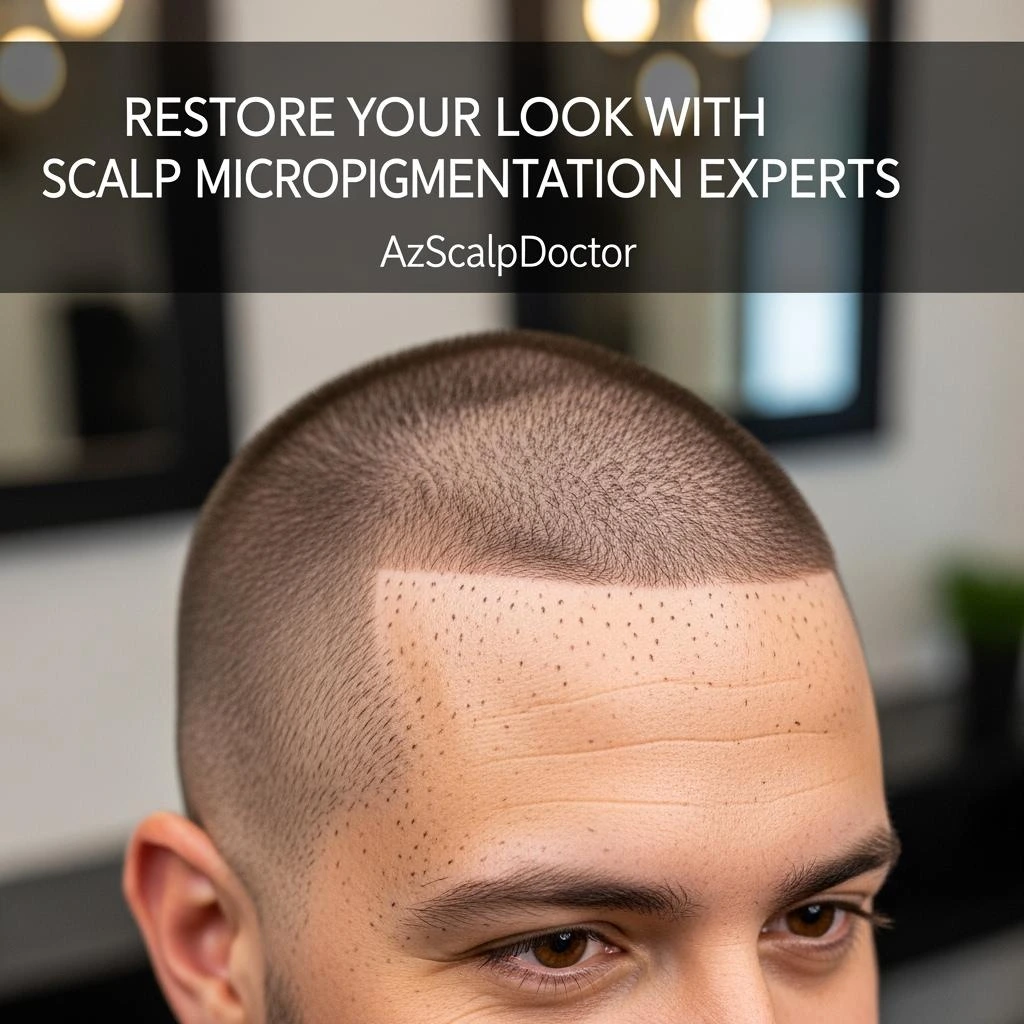
Scalp Micropigmentation is a cosmetic procedure where micro-dots of pigment are carefully embedded into the upper dermal layer of the scalp. These dots mimic the appearance of hair follicles or create a visual density behind thinning hair. Unlike hair transplantation, SMP does not produce new hair growth — instead, it enhances the illusion of hair.
How SMP Differs from Other Hair Loss Solutions
| Approach | Adds Real Hair? | Downtime | Maintenance | Ideal Use |
|---|---|---|---|---|
| Scalp Micropigmentation | No | Minimal | Touch-up sessions | Camouflage thinning, scars, create buzz-cut look |
| Hair Transplant (FUE/FUT) | Yes | Weeks | Possibly none or minor touch-ups | For patients with donor hair available |
| Topical / Pharmacologic (e.g. minoxidil, finasteride) | Stimulates hair | None | Continuous use | Early-stage thinning, diffuse hair-loss |
| Tricopigmentation (temporary pigment) | No | Minimal | More frequent renewals (1–2 year fade) | “Trial” SMP or short-term visual density |
Because SMP is a non-invasive, low-downtime procedure, it’s especially appealing for clients who either don’t want surgery or have limited donor hair for transplants.
How Scalp Micropigmentation Works: Medical & Technical Foundations
Where & How Pigment Is Implanted
- The pigment is placed into the upper dermal layer of the scalp — shallow enough to maintain crisp, fine dots, yet deep enough to hold the pigment and avoid surface fading.
- Inserting too deep can lead to pigment migration (i.e. “blowouts”) or a blurred effect; too shallow and the pigment fades quickly.
- The size, shape, and spacing of these micro-dots must be carefully calibrated based on the client’s hair texture, scalp tone, and design goals.
Sessions & Layering
- Most full SMP cases require 2 to 4 sessions, typically spaced days to weeks apart.
- Initial sessions lay down the baseline density; subsequent sessions refine dot size, shading, and blending.
- This layered approach helps create natural transitions and avoids over-darkening.
Instrumentation, Pigments, and Technique
- Single-use micro-needles are standard, sterilized under medical protocols.
- The hand pressure, angle, and rhythm must be consistent to avoid uneven results.
- Cosmetic-grade pigments designed for scalp use are selected for stability (resistance to fading and color shift) and safety.
- The practitioner must anticipate UV exposure, skin tone changes, and natural pigment degradation over time.
Anesthesia & Comfort
- Topical numbing agents are typically used to minimize discomfort.
- Patients may feel mild prickling or stinging, but most describe it as tolerable.
- Scalp areas differ in sensitivity, so the practitioner must monitor carefully.
Aftercare & Healing
- After SMP, mild redness or swelling is common for a few hours to a day.
- The client should avoid washing the scalp for a few days and refrain from sweating, swimming, or heavy sun exposure during that period.
- Over subsequent weeks, minor flaking or scabbing may occur; gentle care is critical.
- Long-term, clients must protect the scalp from UV rays (use hats / sunscreen) to slow pigment fading.
Benefits of Scalp Micropigmentation
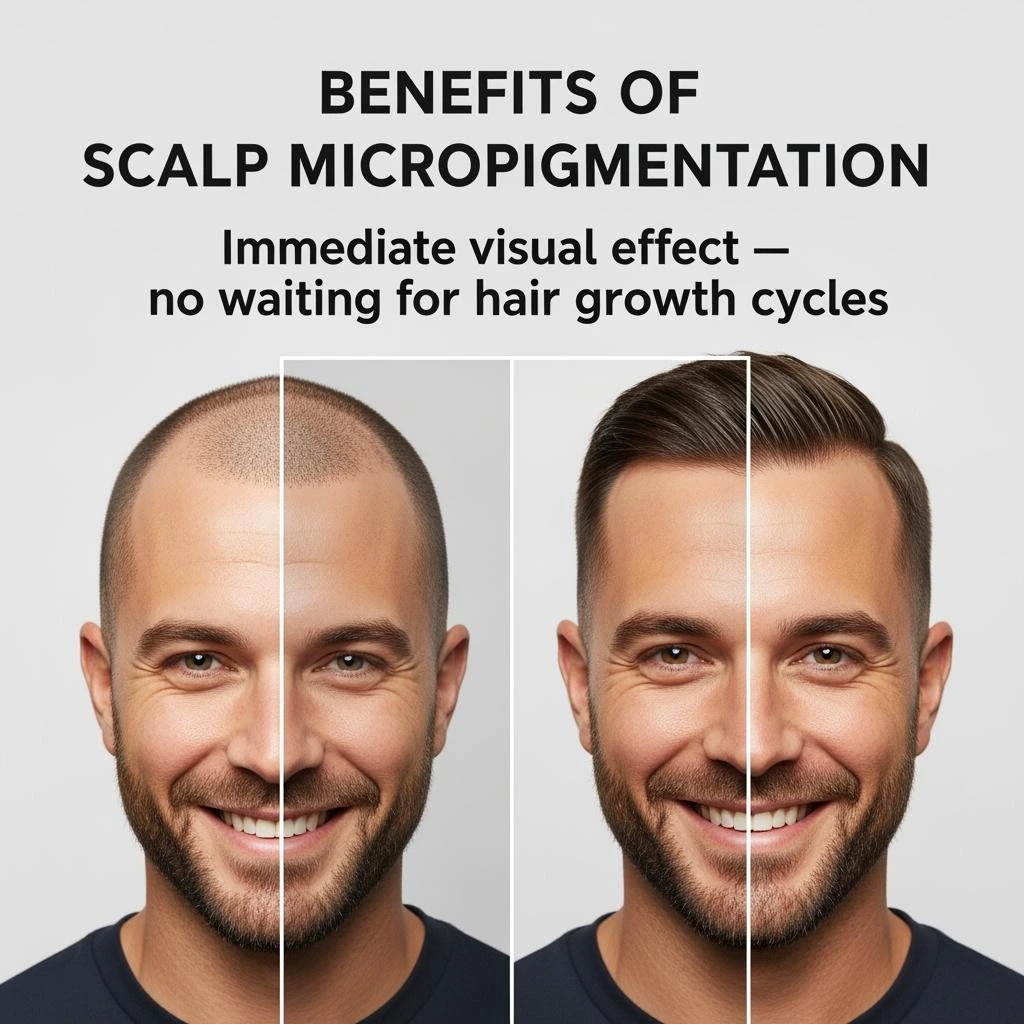
- Immediate visual effect — no waiting for hair growth cycles
- Minimal downtime — return to normal life quickly
- Low maintenance — periodic touch-up sessions (e.g. every 3–5 years)
- Scar camouflage — hides surgical scars (FUT, FUE) or trauma
- Versatility — suitable for men, women, various hair loss types
- Cost-effective alternative when comparing with transplantation + multiple treatments
When done properly by a reputable practitioner like AzScalpDoctor, SMP can dramatically improve the aesthetic of hair density and restore confidence.
Realistic Expectations: Before & After with AzScalpDoctor
To set proper client expectations, AzScalpDoctor showcases before-and-after galleries with consistent lighting and angle. These examples help clients visualize the transformation and calibrate expectations realistically.
Important considerations:
- Hairline design should be conservative and sculpted to achieve a natural effect.
- Dot density should mimic natural scalp visibility—too dense may look artificial; too light may not hide scalp.
- Color matching is critical—pigments must be selected to harmonize with existing hair color, skin tone, and future changes (e.g., graying).
Testimonials from AzScalpDoctor clients reinforce trust and illustrate outcome satisfaction in real-world settings.
Is Scalp Micropigmentation Safe?
When performed by trained professionals following medical protocols, SMP is considered a low-risk cosmetic procedure. However, safety depends heavily on:
- Use of sterile, single-use equipment
- High-grade, allergy-tested pigments
- Proper client screening (for skin conditions, allergies, keloid history)
- Effective aftercare and infection monitoring
Potential complications — though rare — include infection, pigment migration, allergic reaction, and blown-out dots if done improperly.
At AzScalpDoctor, safety is a priority. All technicians adhere to strict sterilization protocols and clinical standards to minimize risk and protect clients.
Scalp Micropigmentation vs Hair Transplant: A Comparative View
| Feature | Scalp Micropigmentation | Hair Transplant (FUE / FUT) |
|---|---|---|
| Nature of Procedure | Non-surgical cosmetic (pigment only) | Surgical relocation of actual hair follicles |
| Downtime | Low (days) | Medium to high (weeks) |
| Pain / Discomfort | Mild, controllable | More substantial — surgical healing required |
| Hair Growth | None (illusion only) | Yes, new hair grows |
| Cost | Moderate | High (surgery, donor harvesting, multiple procedures) |
| Ideal For | Clients with modest donor or wanting non-surgical option | Clients with enough donor hair and desire for real hair |
| Maintenance | Touch-up pigment sessions | Some follow-up procedures, graft care |
In many cases, a combination approach works best — SMP can fill visual gaps, soften scars, or densify areas after transplant. At AzScalpDoctor, we evaluate each client to recommend the right mix of techniques.
How Long Does Scalp Micropigmentation Last?
SMP is semi-permanent — it does fade with time. The durability depends on:
- Pigment quality and depth
- Scalp type, skin chemistry, UV exposure
- Aftercare compliance
- Layering technique and shading strategy
Typical lifespan is 5 to 10 years, though many clients opt for touch-up sessions every 3–5 years to maintain crispness and contrast. In some cases, yearly small touch-ups help preserve optimal aesthetics.
Who’s a Good Candidate for SMP?
Ideal candidates include:
- Men and women with androgenetic hair loss
- People with thinning hair seeking increased scalp coverage
- Clients with scars from past surgery (FUT/FUE) or injuries
- Those who prefer a non-surgical, low-risk alternative
- Individuals with limited donor hair who aren’t transplant candidates
However, SMP is not recommended for:
- Active scalp infections, dermatitis, or psoriasis
- People prone to keloid scarring
- Those with unrealistic expectations (thinking SMP will grow hair)
- Individuals allergic to pigments or with unstable immune conditions
A professional evaluation by AzScalpDoctor ensures safe candidacy and manages expectations.
Cost of Scalp Micropigmentation
Costs vary widely depending on:
- Size of area treated
- Density goals
- Scar mitigation complexity
- Geographic region and practitioner reputation
As a ballpark, many SMP providers charge between US$1,000 and US$5,000 for full-head treatment. Smaller zones or touch-ups cost less.
At AzScalpDoctor, we offer free consultations where we assess your scalp and provide a custom quote. Flexible financing or payment plans may be available to help make SMP accessible.
AzScalpDoctor’s Training & Certification Program
One unique advantage of AzScalpDoctor is that beyond being a clinic, we’re also a training institute for SMP artists. Our curriculum includes:
- Hands-on pigment technique modules
- Skin science, color theory, and hygiene protocols
- Mentorship and supervised live-client practice
- Certification upon completion
This dual role helps us maintain a high standard of care and grow a community of skilled artists. For aspiring SMP professionals, we welcome enquiries about enrollment.
Why Choose AzScalpDoctor?
Expert Practitioners
We are led by Francisco Ahumada, a certified and experienced SMP artist who ensures precision and artistry in every procedure.
Clinical-Grade Safety
We adhere to strict sterilization, single-use tools, and FDA-approved pigment materials to protect your scalp health.
Proven Results
Our portfolio includes numerous successful transformations, supported by before/after galleries and client testimonials.
Local Trust
Based in Mesa, Arizona, AzScalpDoctor is known locally for reliability, transparency, and client care. We take pride in our regional reputation.
Ongoing Support
After your SMP procedure, we provide structured aftercare instructions, monitoring, and touch-up guidance to sustain your results.
Booking Your Consultation
Ready to take the first step? Booking with us is simple:
- Visit our AzScalpDoctor booking page
- Fill out your hair-loss history and upload photos
- We’ll schedule a consultation (in-person or virtual)
- You receive a detailed treatment plan and quote
- Our Location : 1061 N Dobson Rd Ste 107, Mesa, Arizona, USA. [ Google Maps ]
Restore your look and confidence — schedule your SMP consultation with AzScalpDoctor now
Frequently Asked Questions (FAQ)
1. Is scalp micropigmentation painful?
Most clients feel minimal discomfort. Topical anesthetics mitigate stinging, and the process is generally tolerable.
2. How many sessions are needed?
Typically between 2 to 4 sessions, depending on area size and detail required.
3. Can SMP match gray or blond hair?
Yes. Our pigment specialists at AzScalpDoctor customize tones to blend naturally with any hair color and compensate for aging or graying.
4. Is SMP permanent?
It’s semi-permanent. Expect 5–10 years of retention, with occasional touch-up sessions recommended.
5. How soon can I return to work?
Most clients resume normal activity within 1–2 days; avoid sweating, swimming, or sun exposure for several days post-procedure.
Final Thoughts
Scalp micropigmentation is a powerful, medically grounded solution for individuals seeking to restore the illusion of density to thinning hair or conceal scalp scars — all without surgery. When delivered by experienced practitioners who prioritize safety, design, and long-term maintenance, SMP offers both aesthetic and psychological benefits.
At AzScalpDoctor, every treatment is built on precision, care, and client satisfaction. We combine clinical safety protocols, artistic technique, and dedicated customer support to help you reclaim confidence — one dot at a time.
“Restore your confidence with the art of SMP — trust AzScalpDoctor to bring your scalp back to life.”